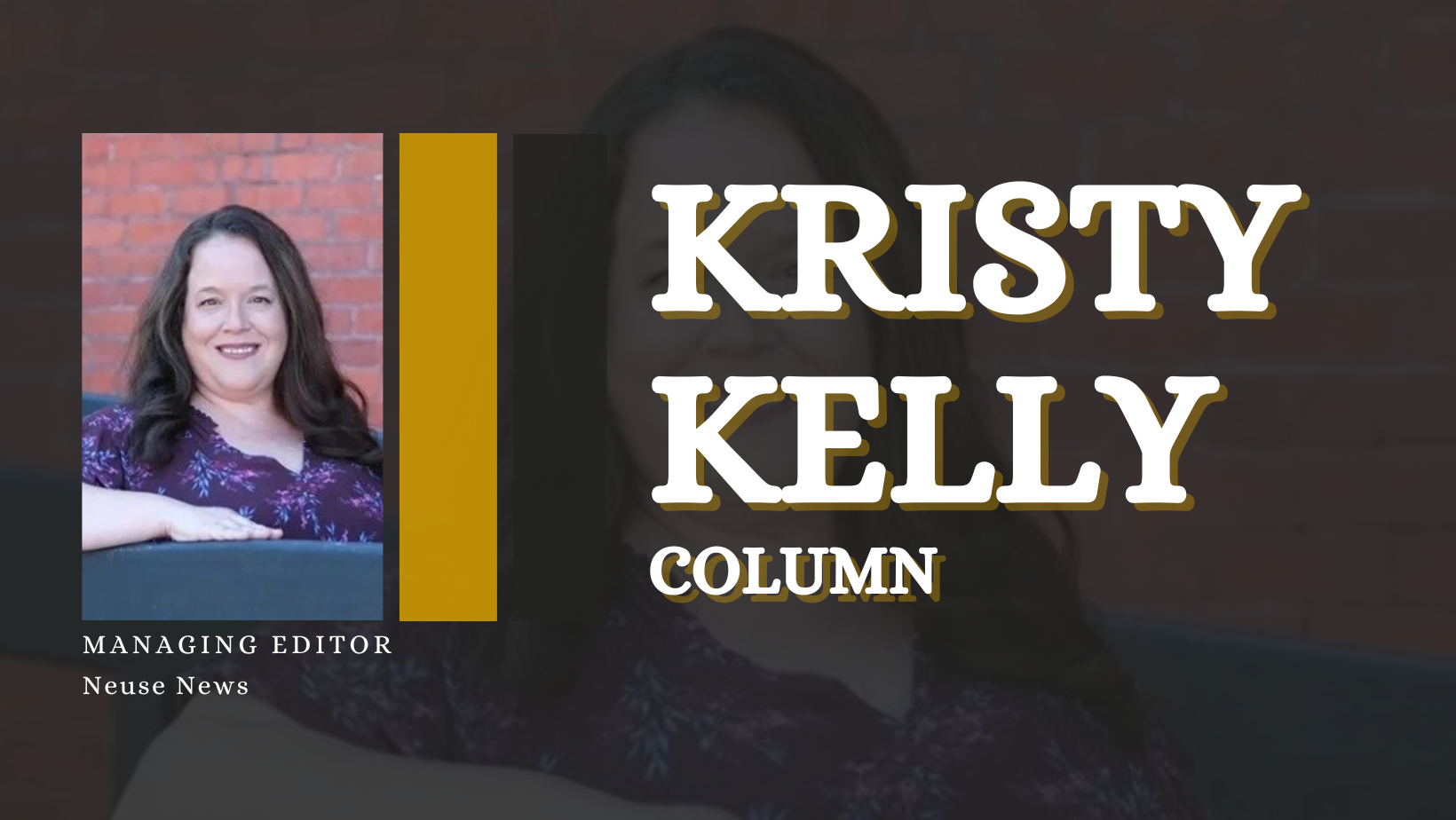
Kristy Kelly: Did the internet rewrite our memories, or did we rewrite the internet?
A reader, that I will refer to as Lee, emailed me with the kind of question that sounds silly until you realize you have wondered the same thing in the cereal aisle.
He started simple. Without looking it up, how do you spell dilemma? With an n, as in dilemna, or without it? I answered quickly: dilemma. That is the spelling I learned, the spelling I use, and the spelling that shows up in every reputable dictionary I trust. I expected that to be the end of it.
It was not.
Lee wrote back to say he knew differently, and then he did something I did not expect. He did not just argue about one word. He offered a whole framework. He described what a lot of people call the Mandela Effect: the unsettling experience of remembering something clearly, discovering it is not considered correct, and then finding other people who remember it the same wrong way.
If you have ever repeated a famous movie line with total confidence and had someone tell you the original is different, you already understand the emotional shape of it. This is not about trivia. It is the sensation of certainty getting contradicted by a world that insists you are mistaken. And in Lee’s case, it is not one line or one logo. It is a list.
He brought up the Fruit of the Loom cornucopia, the car mirror warning people swear used to say may be closer, and a parade of movie lines, song lyrics, book titles, and brand spellings that many people feel have shifted. He wondered out loud whether AI has started altering spellings, lyrics, and cultural artifacts online.
It is tempting to dismiss all of it as the internet doing what it does best: feeding us mistakes and making everyone feel like the ground is shifting under their certainty. But I have been a writer long enough to know language is not just rules. Language is identity. It is how we store our lives.
So I kept writing back.
Because even if you do not buy the different reality idea, the questions underneath it are genuinely interesting.
Why do groups of people misremember the same details?
Why do some wrong versions feel more iconic than the original?
Why do we trust our memory so fiercely in the first place?
And why does it feel like the changed version is often the less elegant one?
I will admit up front that I am a word snob. I do not say that proudly, but I say it accurately. I love etymology, syntax, the weird histories hiding inside everyday words. I also work in local news, which means I have spent years learning to write clearly enough that readers do not have to fight their way through my sentences.
That tension, loving language but needing to simplify it, is part of why Lee’s emails stuck with me. He was not just asking about a quote. He was asking about change. Not the normal kind, either. The kind that makes you wonder whether you are losing your grip on what you know.
He offered examples that range from plausible to eyebrow-raising, including song lyrics he says he remembers with certainty, brand logos that look wrong to him, and a long list of famous lines and titles he believes have been rewritten. He also made a point that is at minimum psychologically honest: it does not make sense to him that bad spellers would add a silent letter that is not there. In his mind, a mistake would be simpler. Someone might drop a letter, not invent one.
That is not proof. But it is a real observation about how people think mistakes happen.
Where I land is less cosmic and more human.
First, memory is not a recording. It is a reconstruction. We remember the gist, then our brains fill in blanks using patterns: the way language usually works, the way we expect a phrase to land, the way a line sounds when it becomes part of everyday speech. Over time, repetition solidifies the reconstructed version. And once you have repeated something for years, it starts to feel like you heard it that way, even if you did not.
Second, culture remixes itself constantly. Parodies, spoofs, and references can become more famous than the source. A line can get cleaned up for a joke, shortened for a headline, or rounded into something catchier. Eventually people absorb the popular version and assume it was always the original.
Third, the internet has made the authoritative version feel both omnipresent and unreliable. Search results shift. Snippets change. Auto-captions get it wrong. Lyrics sites disagree. Clips circulate without context. Even when something is right, it can be hard to locate the clean, primary source that settles the matter.
And yes, AI adds a new layer of confusion. Not because it can rewrite the past inside a DVD collection or a book on your shelf, but because it can flood the present with convincing summaries, misquotes, and synthetic certainty. If the wrong wording gets uploaded and repeated, it becomes searchable, shareable, and easy to believe. That feedback loop is real.
But Lee’s most compelling point is not his theory. It is his pattern. The wrong versions often feel smoother, warmer, more iconic. Our brains like rhythm, punch, and clarity. We remember the version that sounds like it belongs on a poster.
So here is what I want to hear from you: what is yours?
Without looking anything up, how do you spell dilemma?
Do you remember a cornucopia in the Fruit of the Loom logo?
What is the one example you would bet money on, and where did you learn it?
Here is Lee’s list. Tell me which ones hit you as true, which ones you have never heard, and what you would add.
Lee’s List:
"Another Fine Mess" vs. "Another Nice Mess"
"Somewhere Over the Rainbow" vs. "Over the Rainbow"
"Pretty Woman" vs. "Oh, Pretty Woman"
"Life is Like a Box of Chocolates" vs. "Life Was Like a Box of Chocolates"
"I'll be home for Christmas -- you can count on me" vs. "you can plan on me"
"Drive by Fruiting" vs. "Run by Fruiting"
"Remains of the Day" vs. "The Remains of The Day"
"Winds of Change" vs "Wind of Change"
"We Shall Never Surrender" vs. "We Shall Fight on the Beaches"
"It's a Beautiful Day; don't let it slip away" vs "don't let it get away"
"Hello Clarice" vs "Good morning"
"NO LUKE. I am your father" vs "No, I'm your father"
"Tis but a scratch... merely a flesh wound!" vs "It's just a flesh wound!"
"And you knew who you were then, girls were girls and men were men" vs "and you knew where you were then, girls were girls and men were men
"We're going to need a bigger boat" vs "You're going to need a bigger boat"
"Tomorrow, tomorrow, I love ya, tomorrow - you're only a day away" vs "you're always a day away"
"And mamma in her kerchief, and I in my cap had just settled OUR BRAINS for a long winter's nap" vs "had just settled down for a long winter's nap"
Neuse News is a locally-owned small business startup in downtown Kinston. Our goal is to provide free, hyper-local news to Lenoir, Greene and Jones counties. The kind of news our grandparents read in a format fit for today's times.
We provide this by having supportive advertisers and we encourage you to click on their ads, shop with them, and eat with them. Every bit of financial support is important to help us sustain free, hyper-local news.
Please consider supporting Neuse News with as little as $5 one-time or via a monthly option. Every little bit helps us, help you.