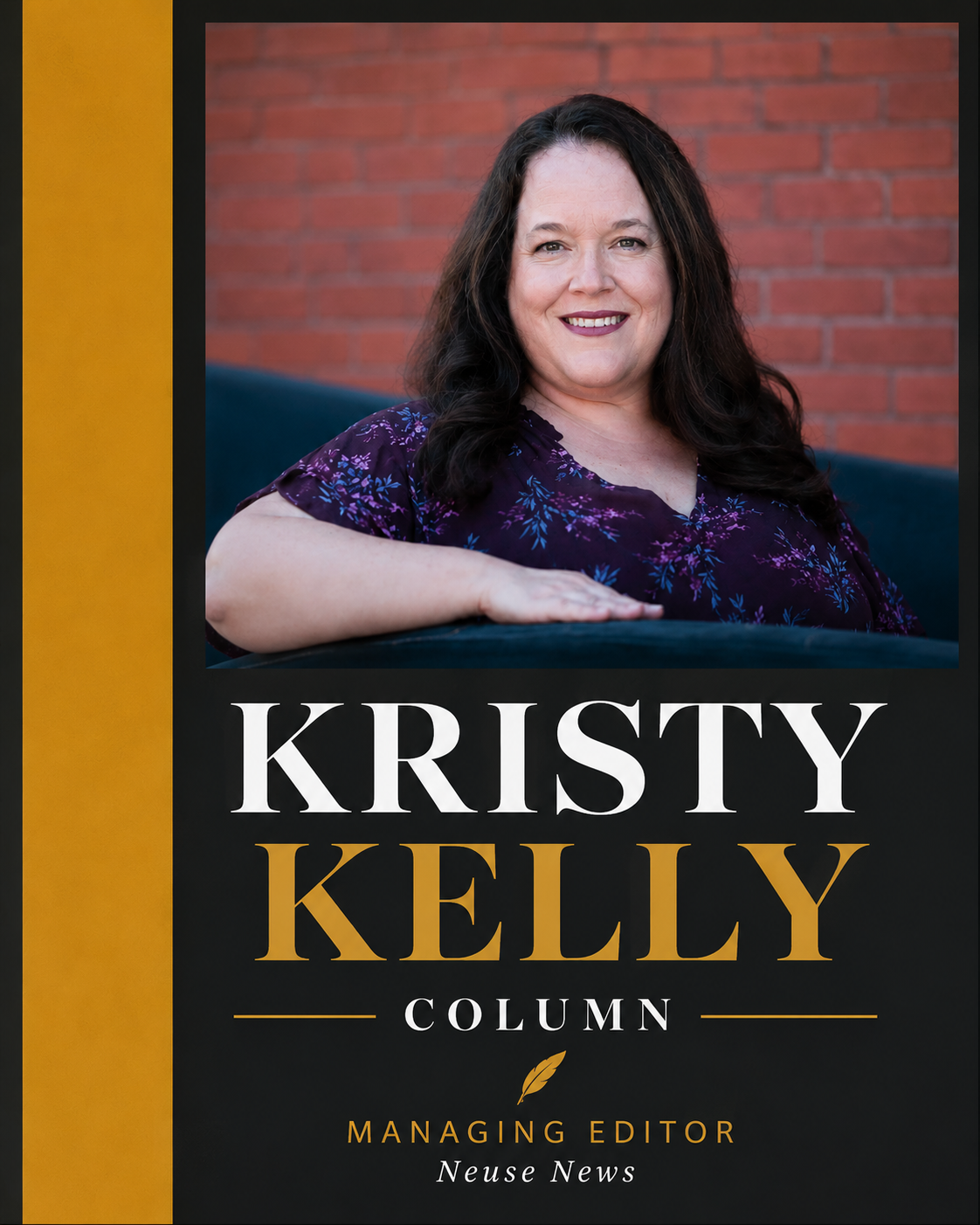

Kristy Kelly: The children of 9/11 grew up in its shadow
Twenty-five years ago, adults watched the world change on live television. Our children watched us watching it.
They may not have understood why airplanes were crashing into buildings or why their teachers suddenly turned on classroom televisions. They did not know who had attacked us, what terrorism meant or why adults were afraid. But they understood that something terrible had happened. More importantly, they noticed what happened to the adults afterward.
In 2001, Destiny Stout was a young child more interested in watching Pokémon than the news. Her grandparents changed the channel when the attacks began, and Destiny became upset enough about losing her show that she received a spanking.
It is the kind of childhood memory that sounds almost funny now, not because anything about Sept. 11 was funny, but because it captures the innocence of children who could not comprehend what they were seeing.
Destiny’s father, Jaime Atienza, understood that something much larger had happened.
“It opened my eyes to a new hatred among us,” Atienza said.
That awareness changed the way he raised his daughter. He became more protective and more cautious about taking her to public events, particularly major events in large cities.
His fear was understandable. On Sept. 10, 2001, most Americans did not look at an airplane, skyscraper, sporting event or crowded public space and imagine it as the setting for mass murder. On Sept. 12, we could imagine danger almost anywhere.
Parents could not prevent another terrorist attack. We could not control international conflicts or know whether another plane would fall from the sky. What we could control, or believed we could control, was where our children went, what they watched and how far they strayed from us.
I know because I did it, too. My daughter, Taylor Bock, was born in 1995. Sept. 11 changed how I viewed the world, my neighbors and people who dressed differently from what I considered socially normal. It created fear where no fear had lived before.
It also changed the way I raised my children. There were no sleepovers and no extended periods out of my sight. I micromanaged their lives more than I probably would have before the attacks.
At the time, I believed I was protecting them. Taylor remembers something else. She remembers watching racism and prejudice become more visible.
“My world didn’t change after 9/11—racism got worse,” she said. “Now people had a reason to be openly racist.”
She remembers adults excluding people who appeared Middle Eastern, as well as people who were Black, Hispanic or simply had darker skin. Watching adults behave that way changed how she viewed them at a young age.
“I judge people based on their actions, not where they come from or their skin,” Bock said.
That is difficult for me to read as her mother because I remember my own fear. I remember looking at people differently after the attacks. I can call it caution, protectiveness or maternal instinct, but fear does not always remain contained inside us. Children can see it. They can hear it in our words and recognize it in the people we avoid.
Elizabeth “Izzy” Pritchard, born in 1992, was in fourth-grade English class when an announcement came over the intercom telling teachers to turn on their televisions. The first tower had already been hit.
“When the second tower was hit, my teacher turned the TV off,” Pritchard said. “After that, the school kind of went hectic.”
She did not fully understand what was happening. Her family had never been especially political and did not regularly watch the news. That changed after Sept. 11, although Izzy was shielded from much of the coverage because the images were so terrifying.
Like Taylor, Izzy became more conscious of prejudice as she grew older.
“Growing up in the South, I already knew racism existed,” she said. “But after 9/11, I noticed prejudice becoming more prevalent toward different racial and ethnic groups, not just African Americans.”
Her stepfather, Jimmy “JJ” Pritchard, recognized that change within himself.
“I was never really someone who thought I would racially profile people, but over time I realized I had become more prejudiced toward certain ethnic groups because of what happened,” Pritchard said.
He struggled with those feelings before they eventually faded.
Sept. 11 also made him more conscious of what Izzy watched and what she was being exposed to. Although he still describes his approach as a tough-love, “Mommy Dearest, Joan Crawford parenting style,” he became more protective and monitored the disturbing images she saw on television.
Tyler Stout, born in 1989, was in sixth-grade band class at Woodington Middle School when an announcement came over the intercom saying there had been a bombing in New York. A television was rolled into the classroom, where the students learned that airplanes had struck the World Trade Center.
For Tyler, the attacks inspired a stronger sense of patriotism.
His mother, Marcia Stout, had believed she was raising her children in a country protected from the kinds of conflicts seen elsewhere in the world.
“9/11 did change the way I saw the world—or my part of it, anyway,” Stout said. “I felt like I lived in a safe country where war would not touch us. I found out that terrorists can invade any place at any time.”
The attacks also changed how closely she watched over her children.
“I believe 9/11 caused me to be more protective, and I had a greater desire to know where my children were at all times, even though they were older and in their teens,” Stout said.
Her words capture one of the certainties lost that morning. Before Sept. 11, many Americans believed the violence of war belonged somewhere else. The attacks demonstrated that oceans, borders and military strength could not insulate families from every threat.
These children remember different pieces of the same day: a Pokémon episode interrupted, televisions rolled into classrooms, frightened teachers, chaotic schools and parents suddenly paying closer attention to the news. They also inherited different parts of our response.
Some became more patriotic. Some became more skeptical of adults. Some became more aware of racism and prejudice. Some grew up under tighter rules imposed by parents trying to protect them from dangers we had only just learned to imagine.
When we talk about the legacy of Sept. 11, we often discuss the lives lost, the wars that followed, airport security and the brief period of national unity after the attacks. We do not talk as often about the children who grew up beneath the weight of our fear.
They were watching when the towers fell, even when they were too young to understand. They were also watching us afterward. Twenty-five years later, those children are adults. They can now tell us what they saw—not only on television, but in their homes, schools and communities.
Perhaps remembering Sept. 11 requires more than recalling where we were when the planes struck. It also requires an honest examination of who we became afterward and what we passed on to the children watching us.
We taught them to be careful. We taught them that the world could change without warning. At times, whether we intended to or not, we also taught them whom to fear.
Some of them grew up and chose a different lesson: Judge people by their actions, not their appearance, skin color or place of origin.
Maybe they understood something we adults, in our fear, temporarily forgot.