FRCE steps into the future with first C-130T induction at new Global TransPark facility
MARINE CORPS AIR STATION CHERRY POINT, N.C. – Hangar doors opened to a new milestone recently as Fleet Readiness Center East (FRCE) welcomed its first C-130T Hercules for scheduled maintenance, bringing the brand new facility another step closer to full operational capacity. The induction kicks off the first full-scale maintenance, repair and overhaul (MRO) cycle on the airframe since FRCE was selected as the Navy's designated repair point for the C-130 fleet.
“The induction of our first C-130T Hercules represents more than the arrival of another aircraft. It marks an important step in expanding our capabilities and strengthening our ability to deliver readiness to the warfighter,” said FRCE Commanding Officer Col. Christopher C. McDonald II. “Establishing this heavy-aircraft maintenance capability required deliberate planning, disciplined execution and the collective efforts of an extraordinary workforce.”
“This milestone reflects what we (Department of War, federal, state and local partners) can accomplish when our workforce, resources and priorities are aligned toward a common mission,” he continued. “I am proud of what this team has achieved, but more importantly, I am confident in what we will accomplish together. Our
responsibility is not simply to build capability, but to turn that capability into results for the Fleet. This is how we strengthen readiness today while positioning ourselves to meet the demands of tomorrow.”
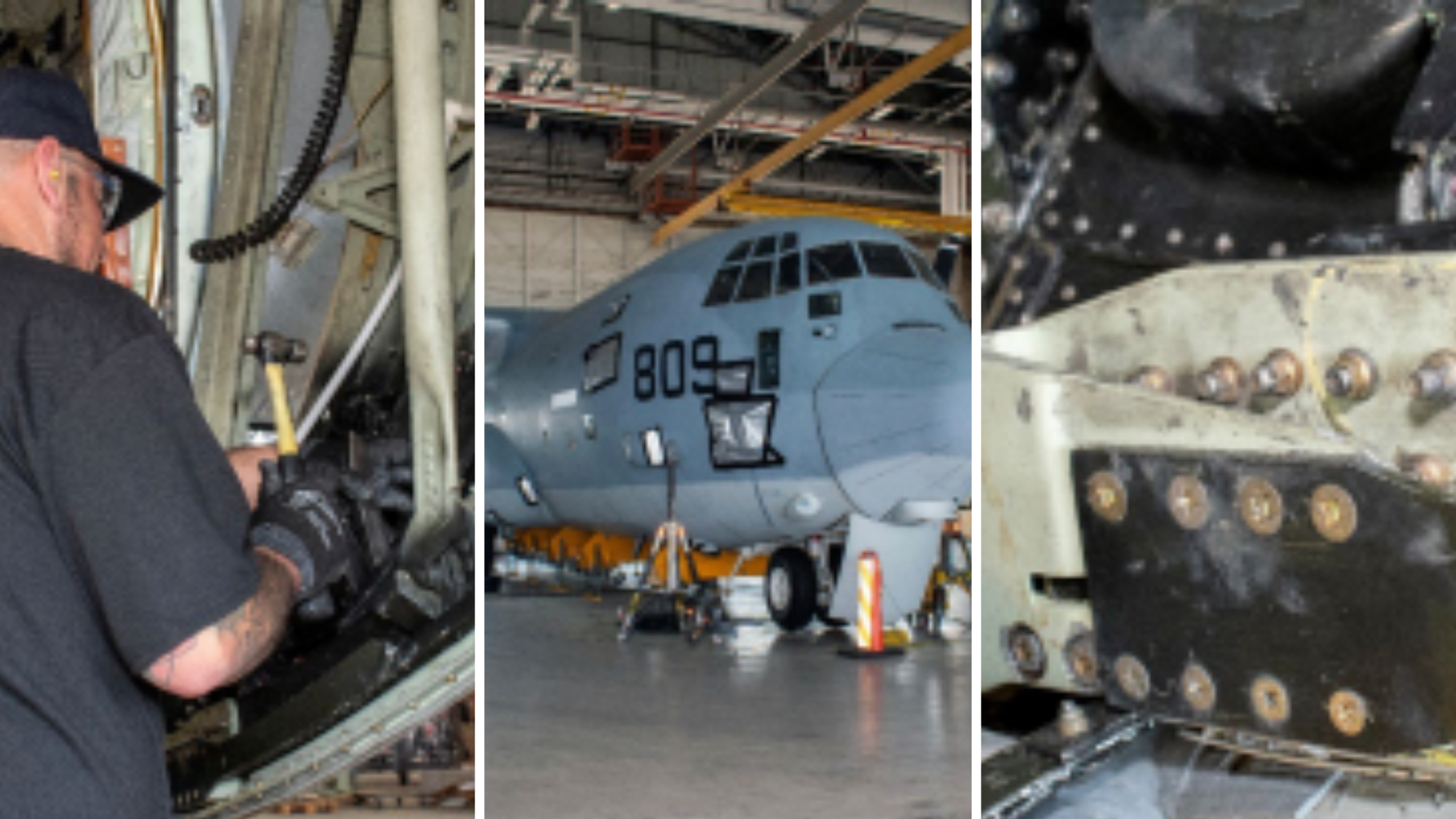
Chris Melton, a C-130 Kinston branch head, noted that the aircraft was cleaned and stripped at Tinker Air Force Base, Oklahoma, before arriving at the new facility. However, future C-130s will not require this offsite step; FRCE expects its own state-of-the-art paint and strip capabilities at the complex to be operational by early 2027.
“This is a true new beginning for us,” said Melton. “While we don’t know exactly what the future holds, this facility opens up incredible opportunities for long-term growth. The possibilities of what we can achieve here in Kinston are practically limitless.”
Even though it only took three days from touchdown to the start of maintenance, this first induction represents the culmination of months of rigorous strategic planning, and three years of preparation since the depot was officially designated for the C-130 workload.
Matt Sinsel, also a C-130 branch head at the facility, noted that as the team docked the aircraft, the overriding feeling on the hangar floor was one of immense excitement and pride for the mission they were launching.
While this induction marks the start of full-scale planned maintenance intervals (PMIs) at the new facility, it builds upon a robust foundation already in place. FRCE personnel have honed their C-130 expertise by performing minor depot inspections (MDIs)—30-day, targeted depot evolutions that tackle structural repairs and corrosion beyond the scope of operational squadrons and intermediate-level maintainers.
Alongside ongoing MDI work at MCAS Cherry Point, FRCE’s specialized travel teams continue deploying directly to flight lines across the globe, bringing depot-level service straight to the fleet. By pairing these expeditionary field teams with the heavy-maintenance throughput of the Kinston facility, FRCE now offers a comprehensive suite of depot-level sustainment capabilities for the C-130 platform.
Transitioning from short-term field inspections to executing multi-month, full-scale overhauls required analyzing how other major depots managed the C-130 workload. To prepare for this massive expansion, FRCE planners studied established operations across the Air Force and commercial sectors.
“Now, we have the opportunity to apply our own expertise and refine the process,” said Sinsel. “There is a deep sense of ownership and passion among our team to innovate and say, 'We can do it this way, and it's much better.' This milestone is a true team investment in making the program a success."
That high level of technical expertise is vital for sustaining the platform. Often hailed as the workhorse of the military, the C-130T Hercules is a medium-sized tactical transport aircraft that supports global naval operations in some of the world's most demanding environments. Its versatile mission profile primarily includes tactical airlift, troop and cargo delivery, rapid emergency evacuations and vital humanitarian relief.
Spanning approximately 75 acres, FRCE’s facility covers more than 700,000 square feet and has direct taxiway access to the North Carolina Global TransPark’s 11,500-foot runway, one of the longest civilian runways in Eastern North Carolina. It is projected to generate more than 350,000 direct artisan labor hours on the C-130 line by 2030.
According to Sinsel, the program’s rapid ramp-up has already generated significant interest across the Navy, with several customers reaching out to inquire about sending additional aircraft to the site. He noted that this early demand reflects a broad recognition of the facility’s vast scale, cutting-edge capabilities and the exceptional caliber of its workforce.
“The most significant impact of this facility is the long-term economic investment it brings to our local communities. That is how I define success,” Sinsel added. “Meeting our initial short-term goals is just the first step. The true mission is to secure two to three generations of steady, high-quality workload for Eastern North Carolina.”
While the facility represents a historic economic win for the region, FRCE’s leadership emphasizes that the ultimate return on this investment will be measured by the combat power delivered to the flight line.
“Our mission has never been simply about maintaining aircraft. It is about delivering the combat ready weapons systems our warfighters need to accomplish their mission at any clime and place when our nation calls,” said
McDonald. “At FRC East, we are one team, one fight—united in purpose, relentless in focus, and disciplined in execution to deliver combat-ready aircraft to our warfighters, on time and on target.”
FRCE is North Carolina's largest maintenance, repair, overhaul and technical services provider, with more than 3,800 civilian, military and contract workers. Its annual revenue exceeds $868 million. The depot provides service to the fleet while functioning as an integral part of the greater U.S. Navy; Naval Air Systems Command; and Commander, Fleet Readiness Centers.
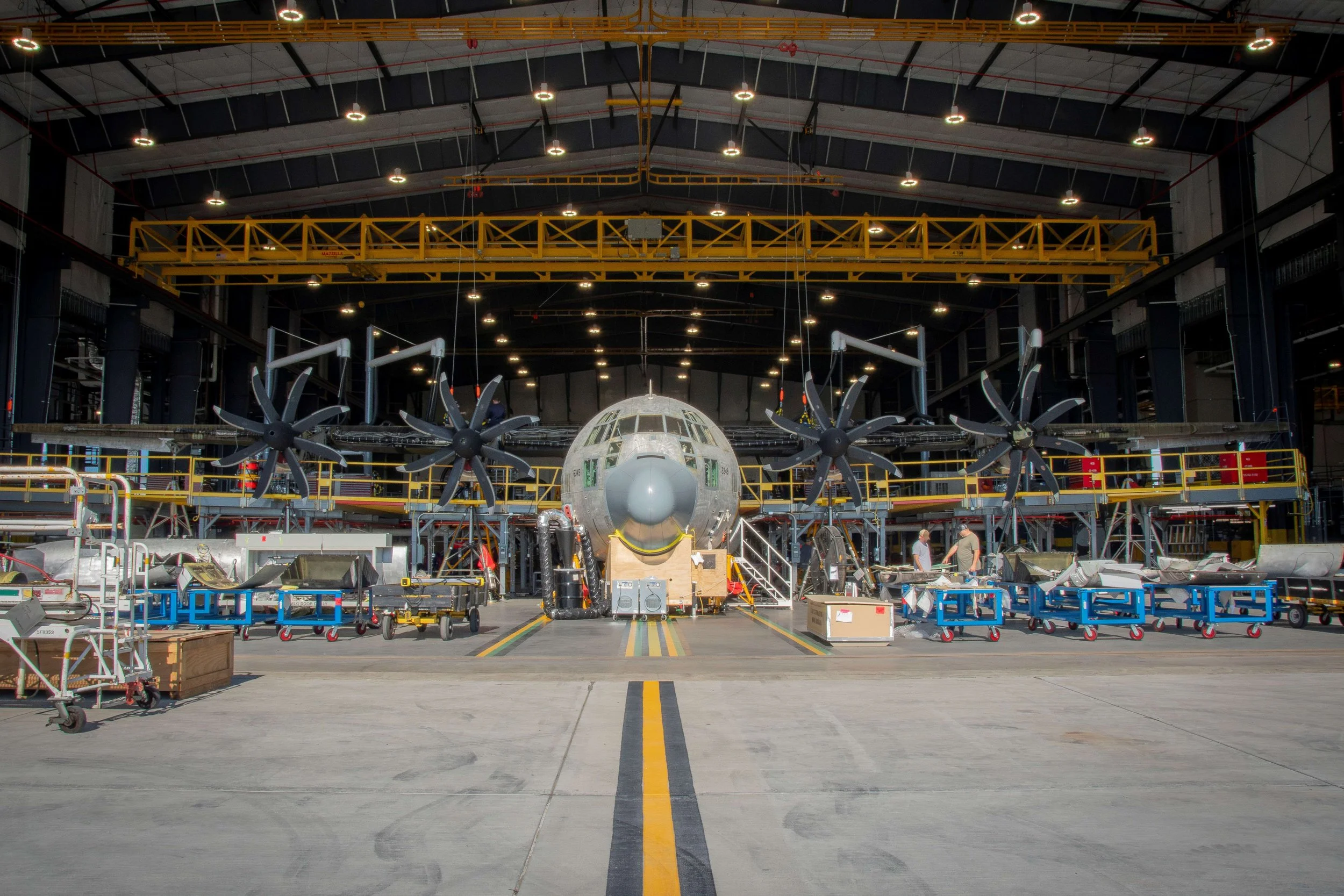
Fleet Readiness Center East recently welcomed its first C-130T Hercules for scheduled maintenance, bringing the depot’s brand-new Global TransPark facility in Kinston, North Carolina, another step closer to full operational capacity. (Photo by Rebecca McGann, Fleet Readiness Center East)
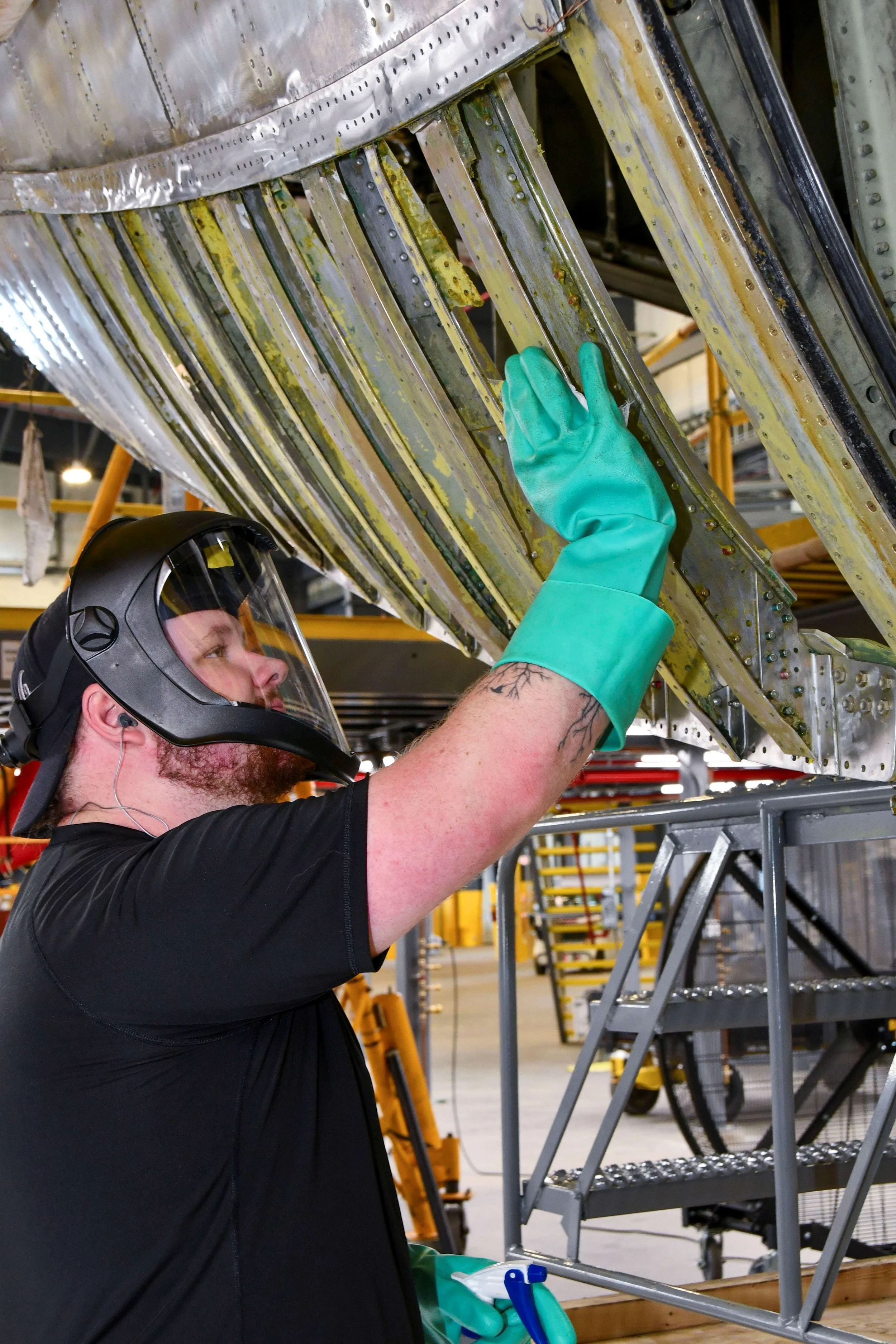
John Kelley, aircraft worker on Fleet Readiness Center East’s (FRCE) C-130 maintenance team, helps prepare the airframe of the newly inducted C-130T Hercules for overhaul. The aircraft arrived at FRCE for maintenance after first being cleaned and stripped at Tinker Air Force Base, Oklahoma. (Photo by Rebecca McGann, Fleet Readiness Center East)
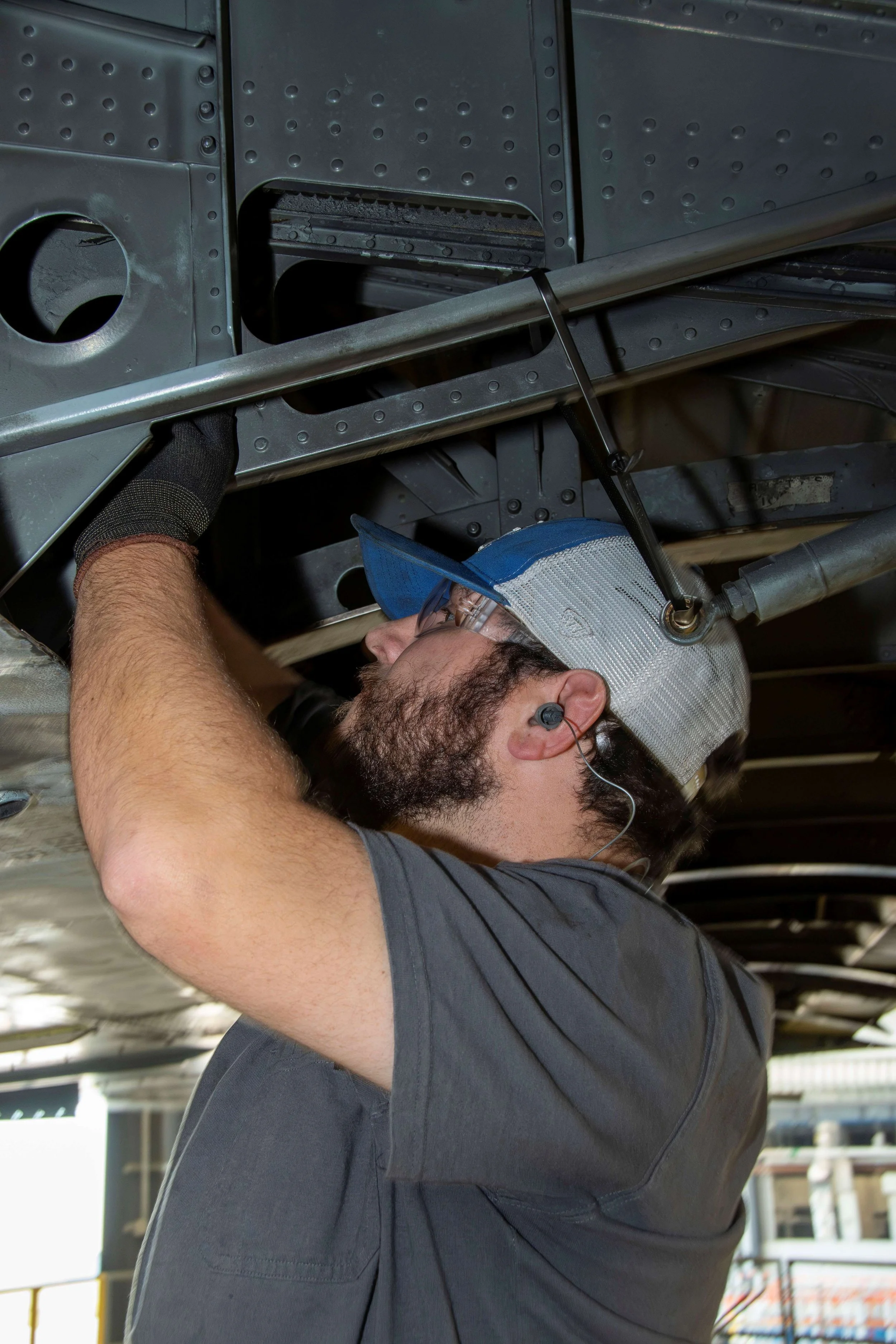
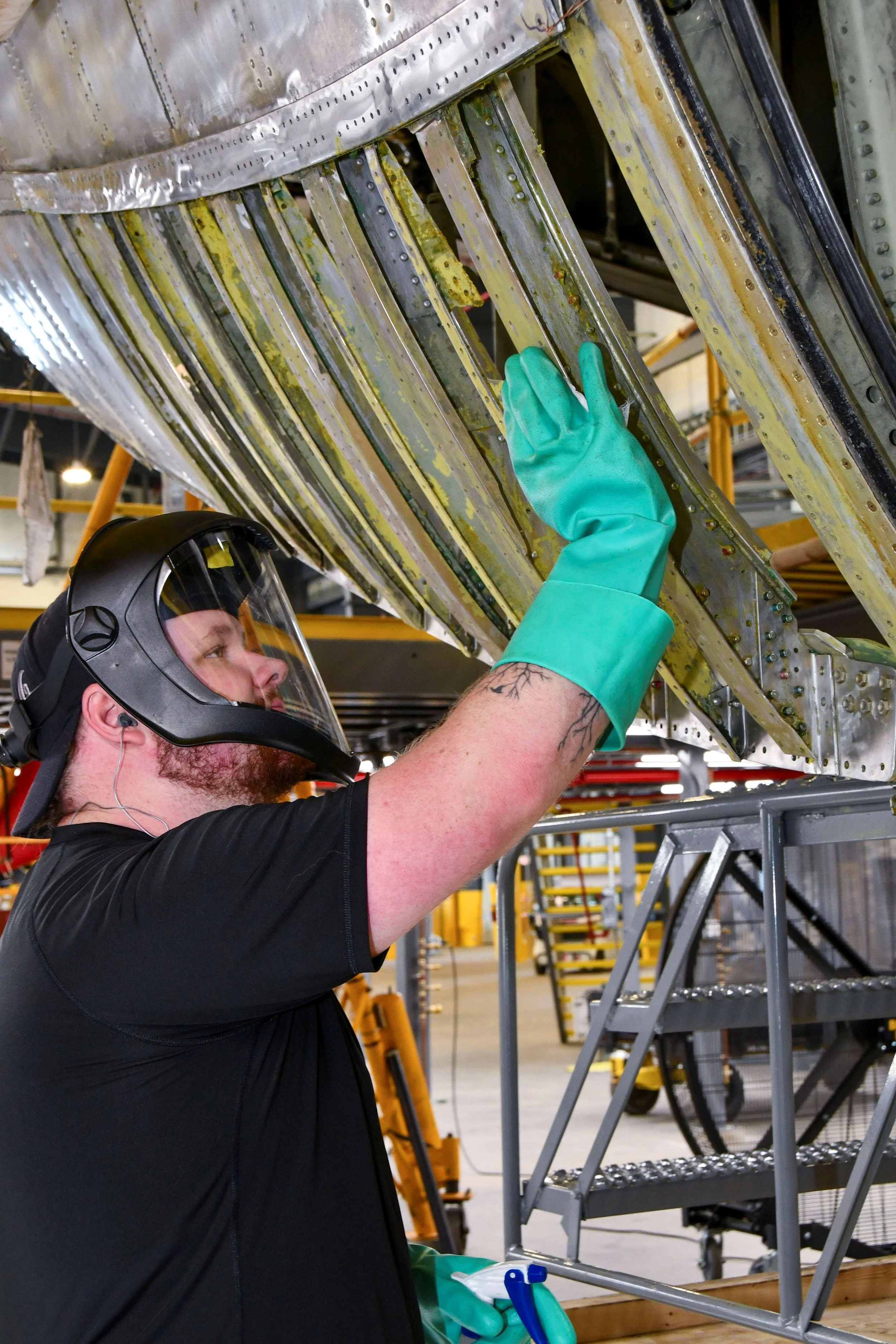
Luke Woods, aircraft worker on Fleet Readiness Center East’s C-130 maintenance team, separates wires from a terminal within the right wing of the depot’s first C-130T Hercules induction. (Photo by Rebecca McGann, Fleet Readiness Center East)