FRCE delivers first metal 3D printed parts to fleet
Samantha Morse
Fleet Readiness Center East
MARINE CORPS AIR STATION CHERRY POINT, N.C. – Fleet Readiness Center East (FRCE) is marking a new era of aircraft sustainment with the delivery of its first flight-certified metal additive manufactured parts to the fleet, significantly improving aircraft downtime and flight line readiness.
A recent collaboration with the Naval Air Systems Command (NAVAIR) Additive Manufacturing Team and Fleet Support Teams has allowed the Advanced Technology and Innovation Team at FRCE to develop processes and obtain certification to use metal additive manufacturing to create its first non-flight-critical aircraft parts.
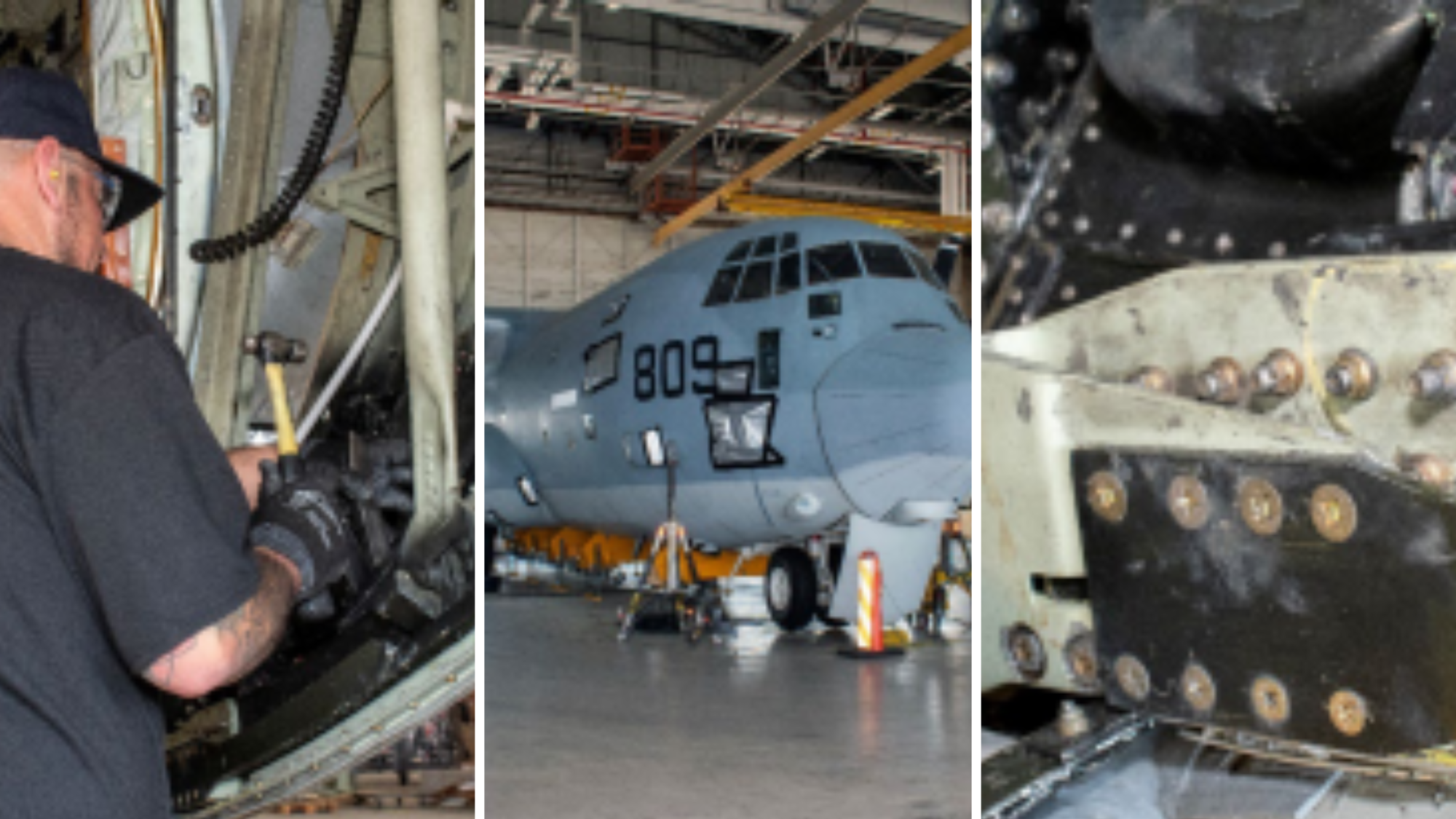
Metal additive manufacturing works similarly to traditional 3D printing, but instead of applying plastic filament layer by layer, it uses high-powered lasers to weld thin layers of aluminum powder into a solid object. Since establishing capability, FRCE has used this process to manufacture and deliver three flight-worthy parts to the fleet: the weapons pylon fitting for the AH-1Z Viper, the repair fitting for the main landing gear on the V-22 Osprey, and a blanking plate for the C-130 Hercules.
The integration of metal additive manufacturing marks a strategic shift in the command’s warfighter support. This capability is designed to enhance mission readiness by providing a more efficient and localized solution for parts procurement, effectively reducing maintenance lead times and ensuring aircraft remain flight ready. This on-demand manufacturing initiative is a central element of FRCE’s broader effort to modernize its support and enhance mission readiness.
Beyond delivering its first flight-ready metal additive manufactured parts, FRCE reached a second milestone along the way: successfully completing the rigorous capability demonstration in under six months. This achievement serves as a formal validation of the depot’s metal additive manufacturing processes and confirms the 3D-printed metal parts made at the facility meet the same safety and quality requirements as traditionally manufactured parts. FRCE’s Advanced Technology and Innovation Team lead said this accomplishment was a group effort between many teams within NAVAIR.
“We were challenged to complete the qualification, production and certification processes for these parts in six months, and we not only met but exceeded that standard,” the team lead said. “This is the fastest this sort of thing has ever been done within Naval Air Systems Command, and it shows that we are competitive with industry standards. This entire process has been a team effort between FRC East, our headquarters, the site in
Lakehurst, and the Fleet Support Teams, working together to ensure these parts are ready and reliable for our troops.”
The pylon fitting, a small but important attachment point for the aircraft’s weapon pylons, was the depot’s first flight-certified metal additive manufactured aircraft part. FRCE delivered the pylon fitting to the H-1 Fleet Support Team in early 2025, followed by the delivery of the landing gear repair fitting to the V-22 Fleet Support Team and the blanking plate to the C-130 Fleet Support Team later that year.
In addition to the three flight-worthy parts, the FRCE has also used the metal additive manufacturing equipment to produce specialized tooling and support parts for the depot’s maintainers to use, allowing for more efficient repairs.
Metal additive manufacturing provides the fleet with a time-saving solution for replacing worn and damaged parts that can be difficult to obtain through the traditional supply chains. FRCE Additive Manufacturing Team lead said producing the parts in-house and on demand improves flight line readiness by decreasing aircraft downtime.
“If there’s a fight and the fleet needs these parts tomorrow, they won’t have time to wait for those parts through traditional supply chains,” the team lead said. “The fleet was having a hard time getting their hands on repair fittings for the V-22 main landing gear – it’s basically a doorstop for the landing gear door when it comes up. They turned to additive manufacturing and asked us if it was something we could make, so we took on that part, and a few others, as part of our capability demonstration. The goal is to give the fleet what they need when they need it, and we did just that.”
FRCE will soon expand its metal additive manufacturing capabilities to include stainless steel, a stronger and more durable material than aluminum. This expansion will allow the depot to produce a wider range of flight critical parts and support equipment for the fleet, further increasing flight line readiness.
FRCE is North Carolina's largest maintenance, repair, overhaul and technical services provider, with more than 4,000 civilian, military and contract workers. Its annual revenue exceeds $865 million. The depot provides service to the fleet while functioning as an integral part of the greater U.S. Navy; Naval Air Systems Command; and Commander, Fleet Readiness Centers. -30-
This is an official news release from the Fleet Readiness Center East Public Affairs Office, intended to inform news media of an event, incident or other occurrence specific to the FRC East purview at Marine Corps Air Stations Cherry Point, New River and Beaufort. For information, call (252) 464-9111.
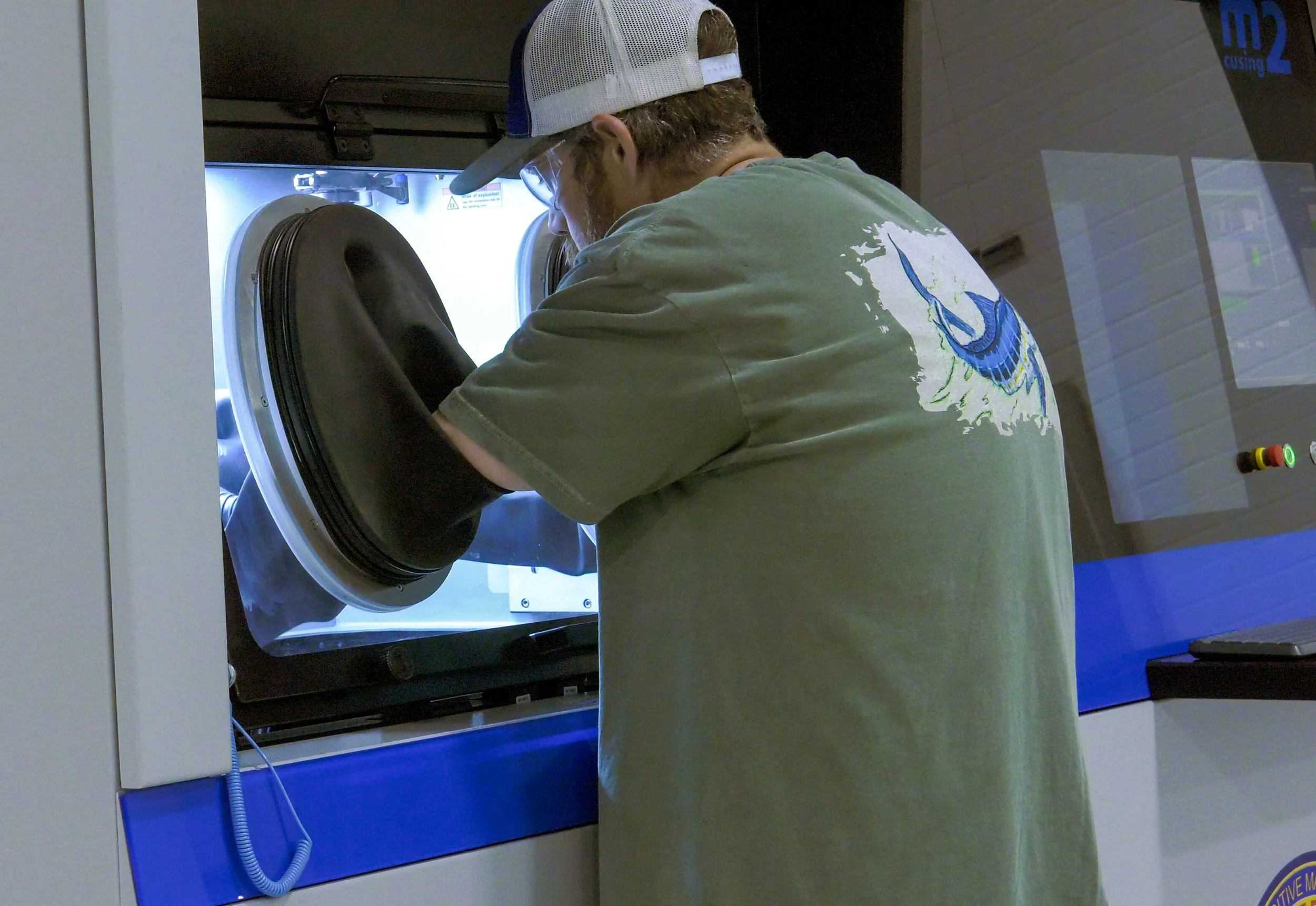
A Fleet Readiness Center East (FRCE) aircraft welder and metal additive operator uses the metal additive manufacturing machine in the facility’s Metal Additive Manufacturing Lab to create support parts for aircraft test equipment. FRCE recently delivered its first flight-certified metal additive manufactured parts to the fleet, marking a significant milestone in aircraft sustainment. (Photo by Heather Wilburn, Fleet Readiness Center East)
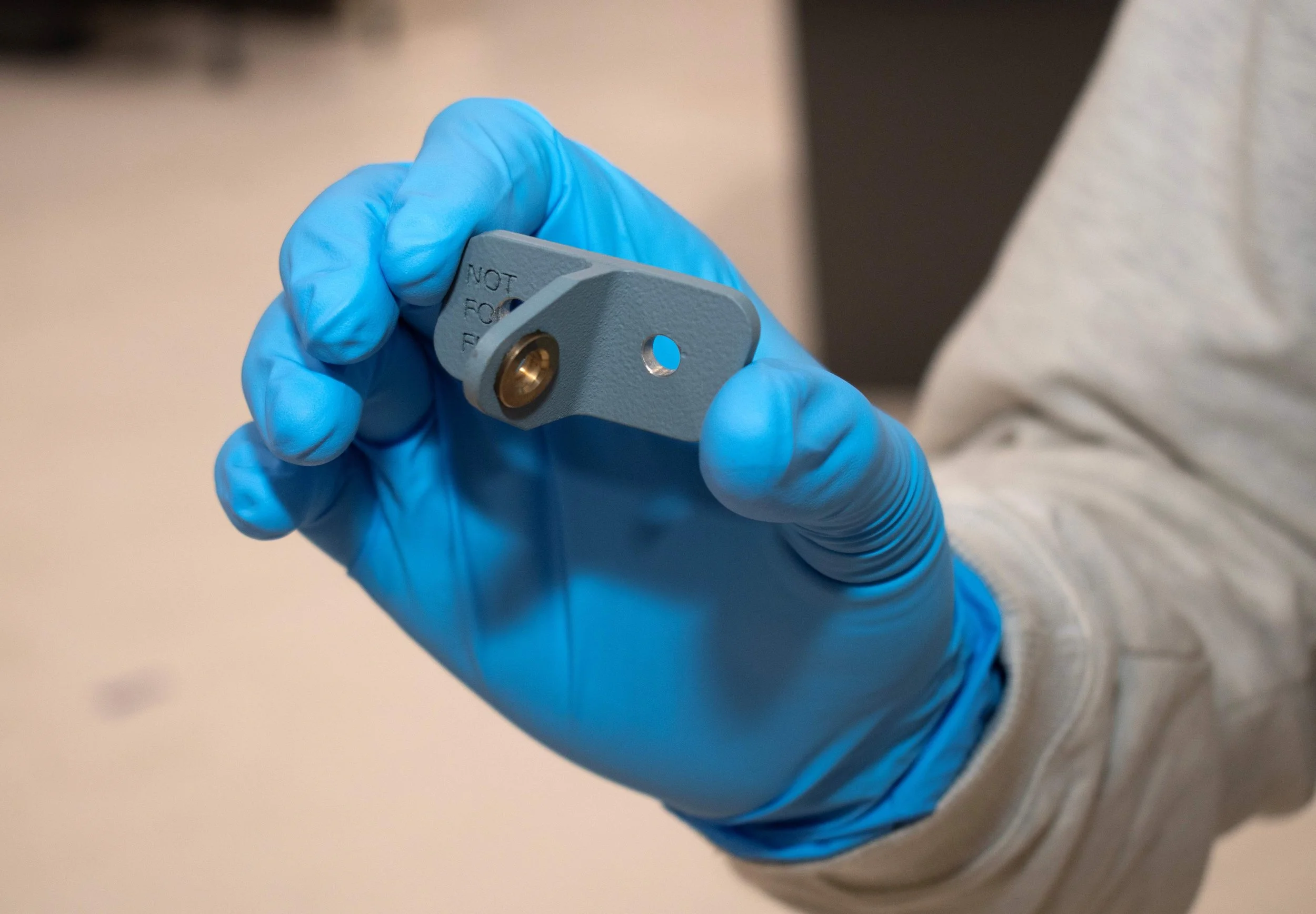
Fleet Readiness Center East (FRCE) recently delivered its first non-flight-critical metal additive manufactured aircraft parts to the fleet, boosting flight line readiness. An FRCE aircraft welder and metal additive operator showcases a sample metal additive manufactured pylon fitting for the AH-1Z Viper that the depot’s Advanced Technology and Innovation Team created for the H-1 Fleet Support Team. (Photo by Samantha Morse, Fleet Readiness Center East)