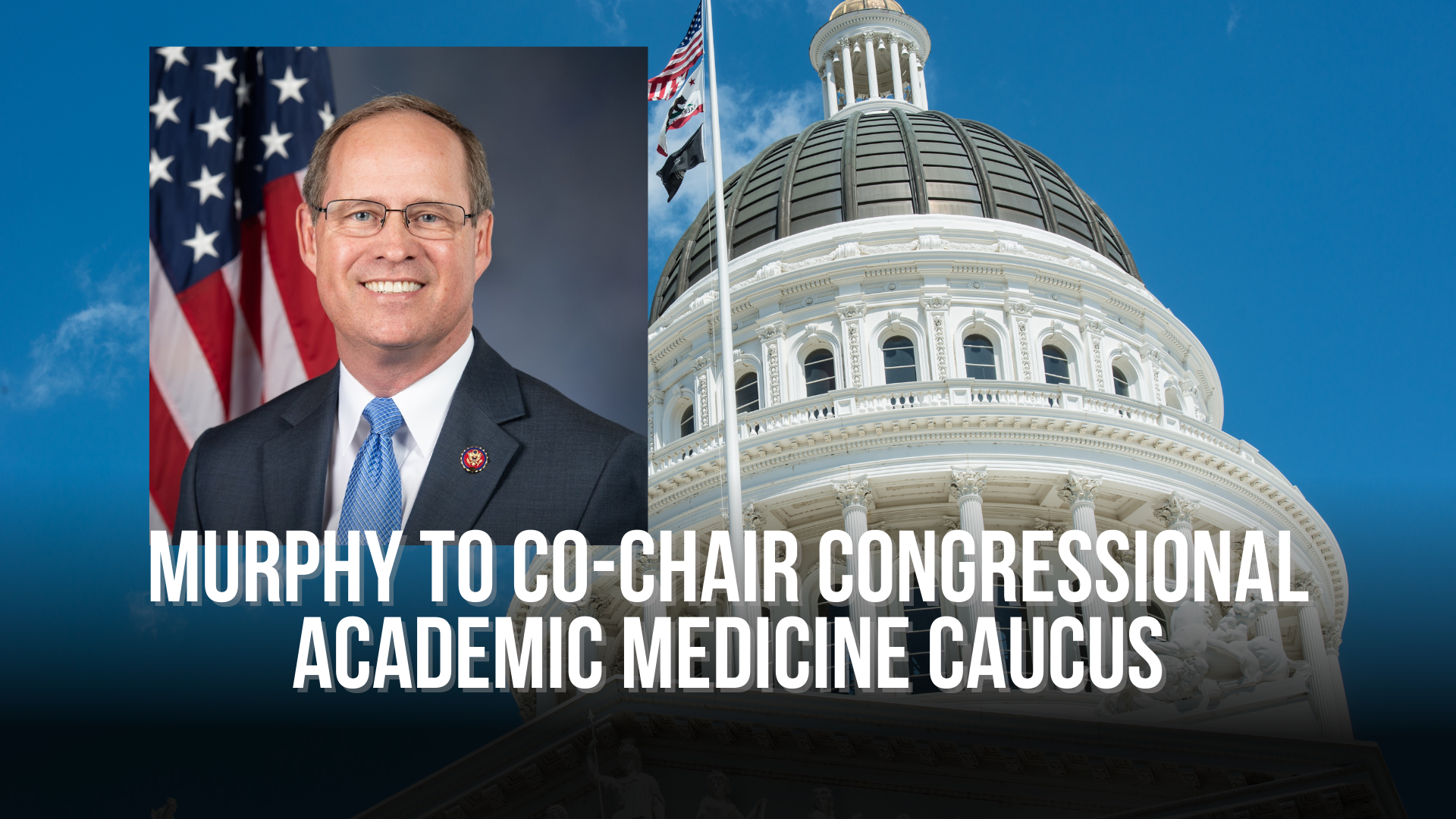
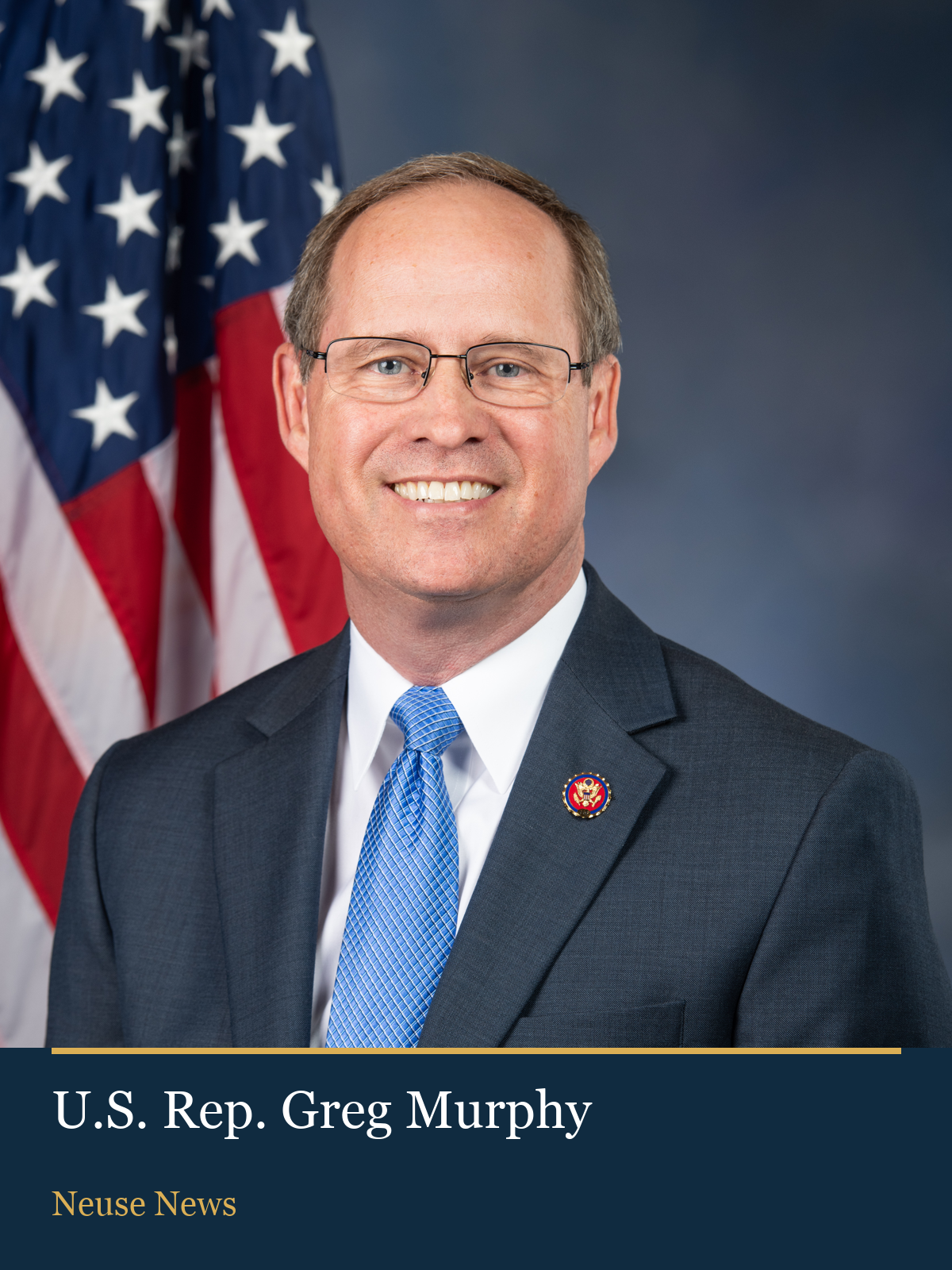
Greg Murphy brings a physician’s perspective to Congress
For U.S. Rep. Greg Murphy, continuing to see patients is part of how he approaches his work in Washington.
The physician and Republican congressman says practicing medicine keeps him connected to the people affected by federal health care policy. When he discusses insurance coverage, physician payments or access to care, he wants those conversations grounded in what patients and doctors are experiencing.
“When I speak about healthcare matters in Washington, Republicans and Democrats alike know that I’m speaking from a position of current experience,” Murphy said.
Murphy represents North Carolina’s 3rd Congressional District and has served in Congress since winning a special election in 2019 following the death of Rep. Walter B. Jones Jr. Before that, he served in the North Carolina House from 2015 to 2019. A urologic surgeon, Murphy graduated from Davidson College in 1985 and earned his medical degree from the University of North Carolina at Chapel Hill in 1989.
Murphy identified affordable, accessible health care as his top legislative priority before the congressional session ends. His concerns include the role of insurance companies, the financial pressures facing rural medical practices and whether patients can continue receiving care close to home.
“It is not a partisan issue,” Murphy said. “It’s a patient versus large corporation issue.”
Murphy singled out UnitedHealthcare while discussing what he described as abuses within the insurance industry. He argued that insurers have expanded their administrative operations and that too much of the money patients pay in premiums supports corporate bureaucracy and profits.
He said his goal is to ensure more of that money goes toward medical care. His criticism reflects his position on the industry, rather than findings established during the interview.
For rural eastern North Carolina, Murphy said another concern is whether independent physicians can afford to keep their practices open.
He helped introduce the bipartisan Patients First Act with Reps. John Joyce, R-Pa., and Kim Schrier, D-Wash. Introduced July 15, the proposal would overhaul Medicare physician payments, including establishing annual updates tied to inflation in practice costs, changing payment adjustment rules and simplifying quality reporting requirements.
Asked what a rural patient would notice if the legislation became law, Murphy focused on the survival of local practices.
“They would notice that their doctor doesn’t have to close their shop,” Murphy said.
He said declining Medicare reimbursement has contributed to financial difficulties for smaller rural practices. The American Medical Association reports that Medicare physician payments declined 33% from 2001 to 2025 after adjusting for inflation in practice expenses. That figure measures the purchasing power of payments relative to practice costs, rather than a 33% reduction in unadjusted payment amounts.
Murphy said stabilizing payments would help physicians remain in business and continue treating Medicare patients.
“We’re just trying to stabilize payment so that these physicians can stay in business and take care of patients in rural North Carolina,” he said.
His legislative interests also extend to agriculture, including efforts to increase demand for American-grown cotton.
Murphy introduced the Buying American Cotton Act of 2026 alongside Rep. Terri Sewell, D-Ala. The bill was introduced Jan. 22 and referred to the House Ways and Means Committee.
The proposal would create a business tax credit tied to the documented amount of U.S.-grown cotton in eligible finished products. It also would require tracing cotton through the supply chain and offer additional incentives for qualifying yarn and fabric produced in the United States.
Asked how the credit would help farmers rather than primarily benefiting the businesses receiving it, Murphy said the objective was to strengthen markets for their crops. He cited competition from foreign sources and synthetic fabrics such as polyester and nylon.
“We just want to make sure that our farmers have markets to sell their product to,” Murphy said.
Under the proposal, the credit would go to qualifying sellers of finished products. Murphy’s argument is that encouraging businesses to use American-grown cotton would increase demand for what farmers produce.
While those proposals address different parts of the regional economy, Murphy returned to his medical practice when asked what else readers should know about him.
He said he worked with the House Ethics Committee after entering Congress to continue practicing medicine and provides that care without compensation.
Murphy gave three reasons for continuing: He enjoys the work, believes his patients appreciate it and considers current clinical experience valuable when debating health policy.
He also criticized policymakers who develop health care rules without having treated patients, calling them “cubicle captains.”
For Murphy, continuing to practice provides a connection between decisions made in Washington and the people receiving care in eastern North Carolina.
“I think it’s critically important for patients across the country, especially in Eastern North Carolina,” he said.