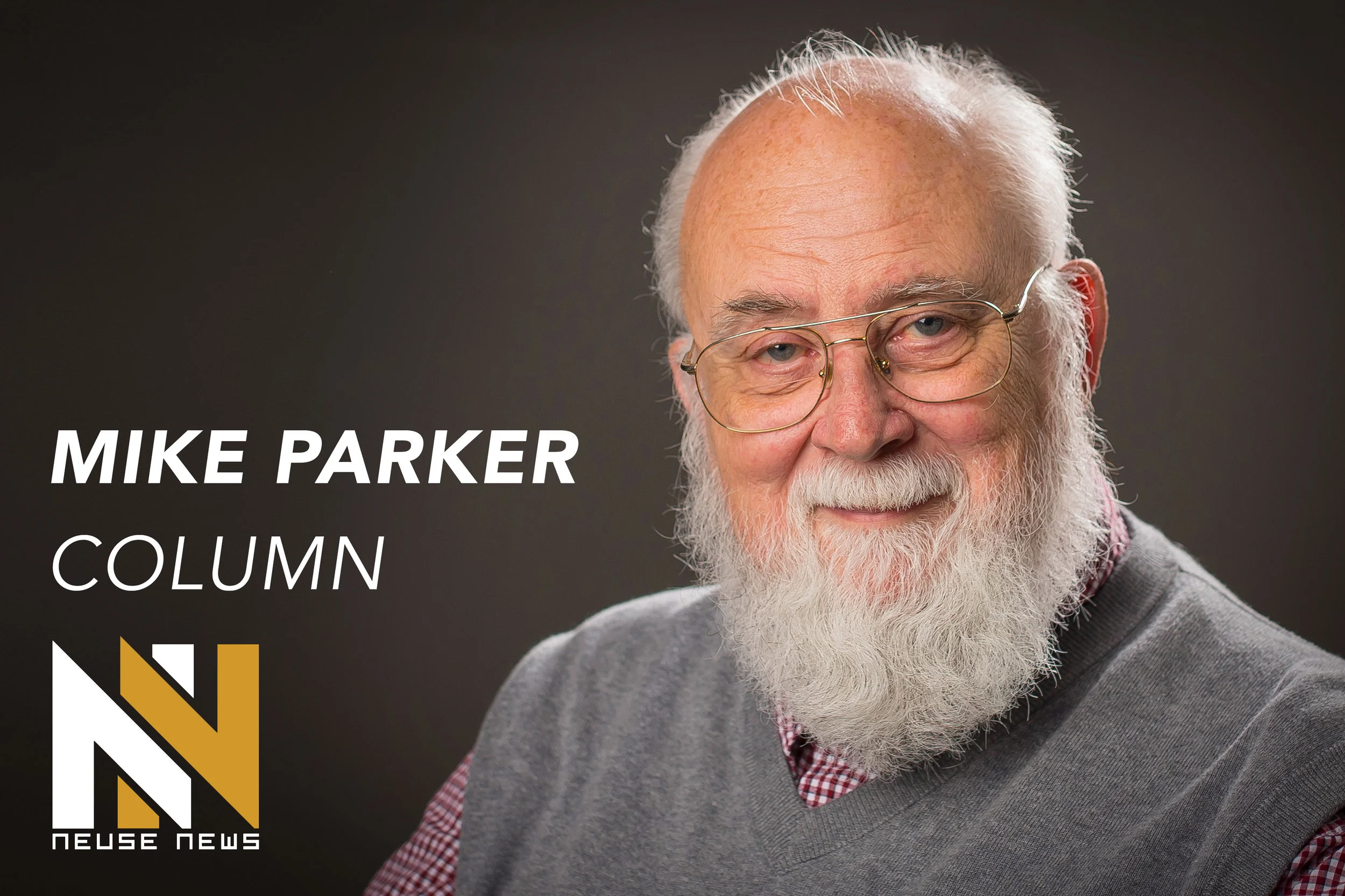

Mike Parker: Principles of the Declaration are as important today as ever
Too many people today think of the Declaration of Independence as some ancient document – something akin to the Dead Sea Scrolls or The Odyssey. A truth few stop to consider is that the principles expressed in the Preamble to the Declaration are just as important today as they were in 1776.
The Declaration has three major parts. The first is the Preamble. The second is the list of grievances. The third is the formal Declaration of the American colonies as “free and independent states.” Our focus today is on the individual clauses of the Preamble that set forth the bedrock principles for those who wrote and signed this document.
The opening words are: “We hold these truths to be self-evident.” “Self-evident” means that the writers did not have to prove the principles they were going to outline. “Self-evident” means these principles are obvious and clearly understood.
The first of the principles focuses on rights that cannot be denied: “that all men are created equal, that they are endowed by their Creator with certain unalienable rights, …”
Principle Number 1: Rights do not come from government. The Creator of humanity endowed each person with these rights. Since rights do not come from government, the government is not allowed to take them away.
Principle Number 2: “that among these are life, liberty, and the pursuit of happiness.” This list is not exhaustive. Instead, these three enumerated rights are the ones governments manipulate to control people, essentially taking away their liberties.
Principle Number 3: “that, to secure these rights, governments are instituted among men, deriving their just powers from the consent of the governed.”
Government is instituted – established – by people. The government does not have a life of its own. The powers that government wields are based on the “consent of the governed.” Ultimately, a government is under the authority of the people who created that government.
Government is not only the servant of the people, but the entire reason that government exists is to secure the rights of those governed. Government exists to protect our Liberty – not to ride roughshod over the people.
Thomas Paine wrote in “Common Sense”: “Society is produced by our wants, and government by our wickedness; the former promotes our happiness positively by uniting our affections, the latter negatively by restraining our vices. The one encourages intercourse, the other creates distinction. The first is a patron, the last a punisher.”
Paine’s mindset lies behind the words of the Declaration’s framers. In an ideal world, we would need no government because everyone would come together to help each other become successful in an upright and honorable way.
So what happens when the government fails in its fundamental duty?
Principle Number 4: “that, whenever any form of government becomes destructive of these ends, it is the right of the people to alter or to abolish it, and to institute a new government, laying its foundation on such principles, and organizing its powers in such form, as to them shall seem most likely to effect their safety and happiness.”
The American Revolution put these very words into action. The American colonies destroyed their ties with Great Britain and immediately went to work instituting a new government. The colonies first tried the Articles of Confederation. When they discovered the weaknesses of that governmental structure, they decided to take another approach.
Although charged with revising the Articles of Confederation, the delegates took a different approach when they found no amount of tweaking would create an effective government under the Articles. The new approach was the U.S. Constitution. That document begins:
“We the People of the United States, to form a more perfect Union, establish Justice, insure domestic Tranquility, provide for the common defense, promote the general Welfare, and secure the Blessings of Liberty to ourselves and our Posterity, do ordain and establish this Constitution for the United States of America.”
The more perfect union means a union more effective than the one created by the Articles of Confederation. Each responsibility of government outlined in the Preamble serves the needs of the people who were creating this new form of government.
So, what do we need? We need a government that establishes justice, ensures domestic tranquility, provides for the common defense, promotes the general welfare, and secures the blessings of Liberty.
Notice the emphasis on Liberty. The distinction between Liberty and freedom highlights the different ways these concepts are valued in American society. Liberty emphasizes the importance of individual rights and the limitations of government power. Freedom is primarily about individuals’ ability to pursue their own interests. The focus of those who founded this nation was “Liberty” – the rights of individuals to be free from governmental interference.
We need to think on these things. We need to process and digest them if we ever hope to have true Liberty.
Mike Parker is a columnist for the Neuse News. You can reach him at mparker16@gmail.com.