
UNC Health Lenoir therapist helps bring adaptive tricycle to local patient
A partnership between UNC Health Lenoir Outpatient Pediatric Physical Therapy and the Greater Fayetteville Chapter of National AMBUCS is helping bring adaptive tricycles to people with disabilities in the community.
The effort recently helped provide an adaptive tricycle to Tykalah, an 18-year-old with cerebral palsy. According to UNC Health Lenoir, Tykalah received a Paceline 16 Amtryke, giving her a new way to ride outdoors with her family.
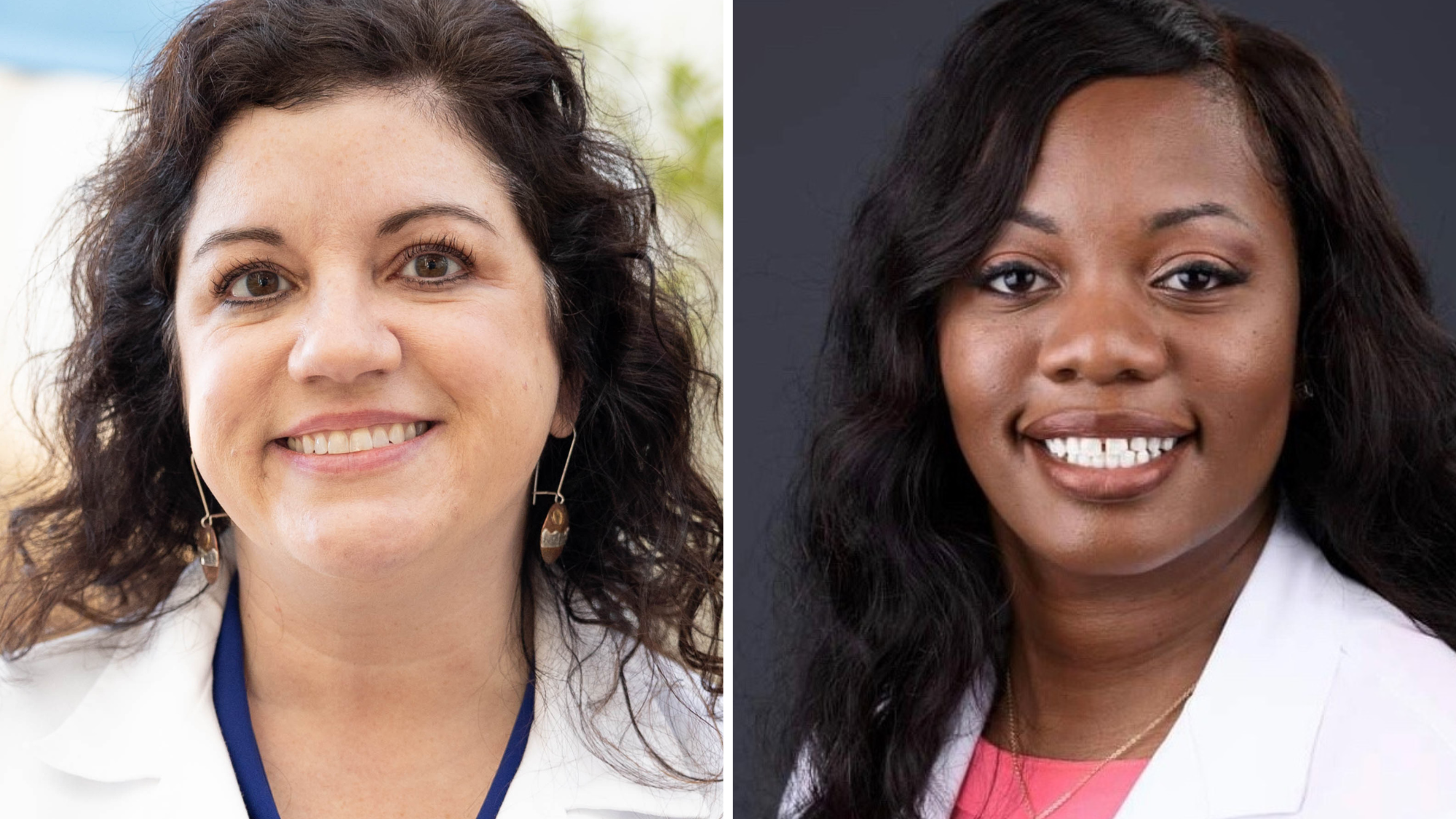
Leslie Burton, a pediatric physical therapist at UNC Health Lenoir Physical Therapy, said she reached out to the Greater Fayetteville Chapter of National AMBUCS after learning more about the organization’s work providing adaptive tricycles for children and adults.
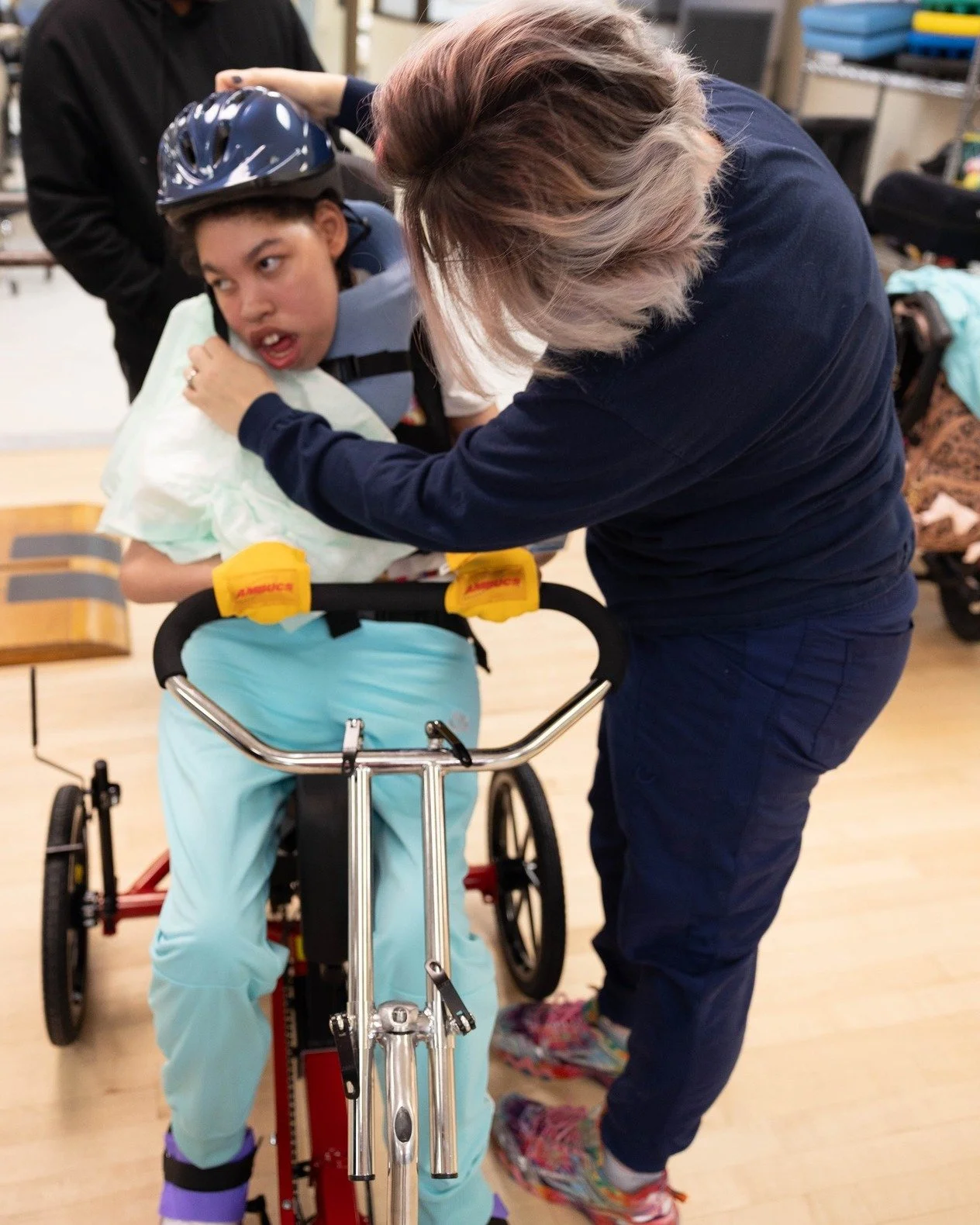
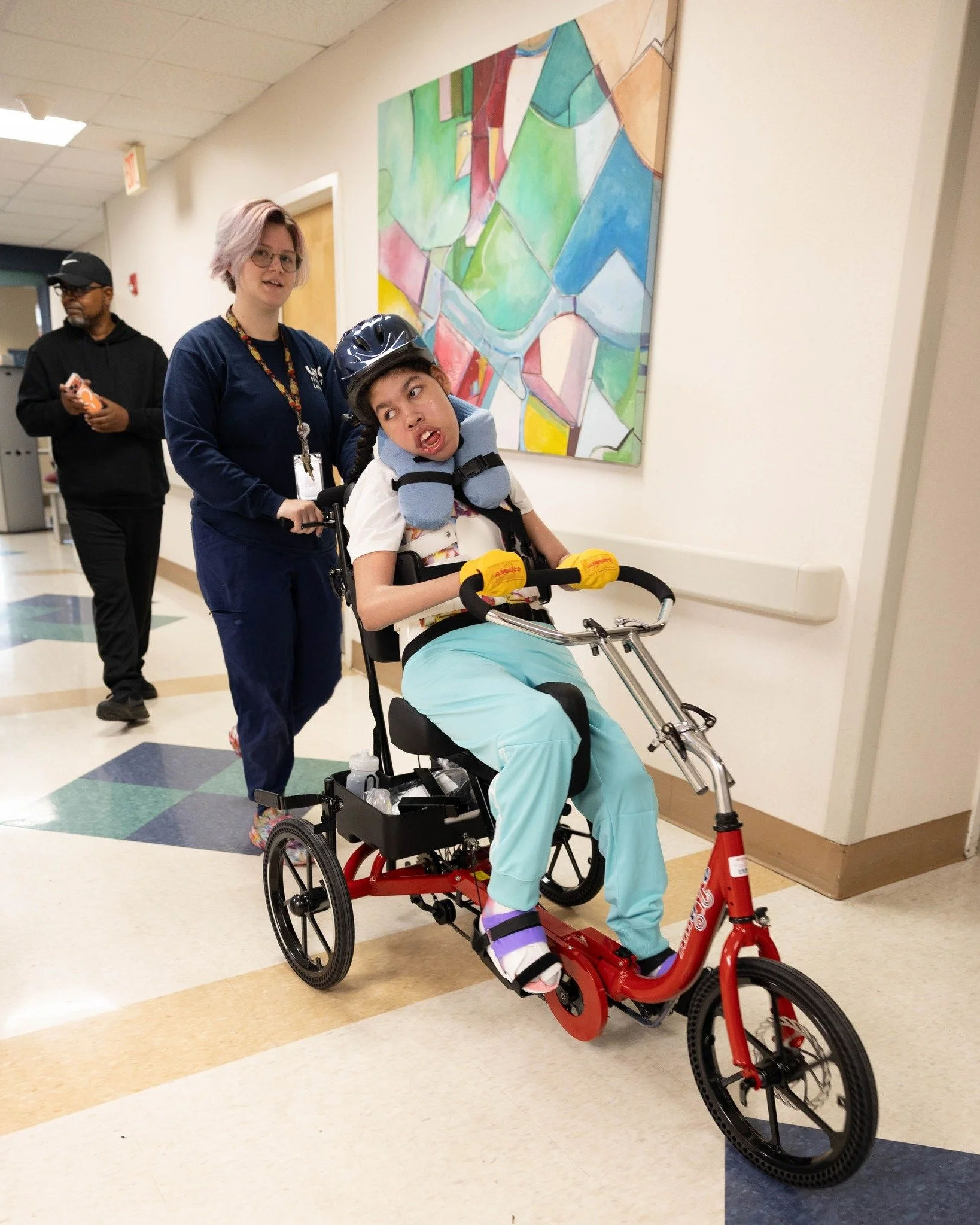
Photos from UNC Health Lenoir Facebook page.
“She is an 18-year-old with cerebral palsy who is fully dependent in all of her mobility,” Burton said. “So an adaptive tricycle was considered for a functional way for her to move about in her community.”
AMBUCS provides adaptive tricycles, known as Amtrykes, that can be customized for people with different physical needs. Burton said she became a member of the Greater Fayetteville chapter and worked with the organization to help secure the tricycle for Tykalah.
Burton said the partnership can help expand access to adaptive equipment for children and adults who may not otherwise be able to get it.
“It is a collaborative community of people of all different types,” Burton said. “So it’s not only therapists. It’s people with business backgrounds, people that just want to help with community relations.”
According to UNC Health Lenoir, the adaptive tricycles are designed to help children and adults with disabilities build strength, improve balance and coordination, and experience the independence of riding. The tricycles are made available at little to no cost through community support and donations.
Burton said accessibility remains a challenge for children with more dependent needs, but organizations such as AMBUCS can help families gain access to equipment that supports everyday participation.
“The overall message is just knowing that these kids are all the same,” Burton said. “They want to explore the world in the same manner that other kids do. It’s just they need different support.”
Burton said riding a bike is something many children experience in their neighborhoods, but children with disabilities may not be able to use a traditional bicycle. Adaptive tricycles give them another way to take part.
“Given the opportunity to get these adaptive tricycles, it provides this whole new arena of activities that they are able to participate in,” Burton said. “It builds those relationships with kids and then also opens the door to the education aspect with children.”
Burton said the larger goal is not only mobility, but inclusion.
“These kids are kids, and they want to do kid things,” Burton said.
Burton said Tykalah was happy while using the tricycle and communicates largely through body language and facial expressions.
“She was smiling the whole time,” Burton said.
Burton said disabilities can look different from one person to another, including among people with the same diagnosis. She said Tykalah’s cerebral palsy is one example, but not the only way cerebral palsy may present.
“It looks different for everybody,” Burton said.
For Burton, the work is part of helping children and adults gain access to the supports they need to participate more fully in everyday life.
“Everybody has their different coping mechanisms, and some people need more supports than others,” Burton said. “And that’s OK.”