
Matt Lococo: Why Leandro matters to everyone…
This past week, the North Carolina Supreme Court ruled that the Leandro case was unconstitutional in forcing the General Assembly to fully fund education equally in the state of North Carolina. As an educator and as a Republican, I have been living in a sense of division for several years. This action by the conservative majority has single-handedly dealt the largest blow to education in our great state in decades.
Education, public education to be more exact, has been under attack since we emerged from the pandemic. Rural schools have been hardest hit by this calculated dismantling of the system that took a century to build. Senator Phil Berger was the leader of the attack on K-12 public education, and thankfully he was defeated in a primary. We all thought this would be the end of the assault, but we soon learned it was not just his actions that were creating this challenge. Leandro was more than a court case; it was a lifeline for rural districts without large tax bases that could fully fund their schools. The North Carolina Constitution requires that every student receive a sound, basic education. It does not define what that means, and it does not clearly state how that education is to be provided by the state, with the exception that it is the responsibility of the state government to fund education.
Leandro was a simple case at its core. Parents from a poor rural district, joined by leaders in that district and several other rural districts, sued the state in order to fully fund the sound, basic education that is demanded by the state constitution. Those parents and leaders had come to the realization that what their children were receiving was not equal to larger, wealthier districts, thereby creating a segregated system not by race but by income and tax level.
Folks on the right are cheering that this is a victory for the General Assembly, that a court should not be able to order budgetary decisions, a power that is given to the General Assembly alone in the state constitution. While on the surface that is a correct argument, one must put themselves in the shoes of the plaintiffs and, for that matter, the majority of the school districts in North Carolina. Currently, North Carolina sits at the very bottom of the list when it comes to educational funding, teacher pay is the lowest when compared to our neighboring states, our students are receiving less and less, and our teachers are being asked to do more with less. Following the pandemic, the picture became even grimmer. In light of the end of ESSER funding from the federal government to help sustain education during the pandemic, which the state had no plan to replace, and the fact that there has been no state budget passed, school districts are now at a crossroads. With this decision, the districts are facing a fiscal cliff that will impact every person in every county in the state. Local school districts are facing critical levels in their fund balances, reduced federal funding, lack of local funding sources, and a very unclear picture from the state, all the while facing the reality of a teaching shortage at levels that rival the past 30 years.
All of this is to say that we as a state need to look in the mirror and decide what we stand for. The state has the ability to fund the rainy day fund, the Opportunity Scholarship, and public education, but our leaders are choosing not to. With the fragile state of our economy, increasing prices on everything, and no budget, districts have no clear path forward. The very real fact that every sector of our schools is facing rising costs may mean that we are facing reductions in our already fragile teacher workforce. Just recently, Pitt County, by far the largest school district in our coverage area, reduced its staff by eliminating 70 teaching, student-facing positions. The reality is that with no budget, no increase in funding, and no clear picture, more teachers face this same fate in much smaller districts. We cannot sustain the current funding formula or the situation we face. Leandro was a clear attempt to make education fair across the board when it came to funding, but now we do not know where we will be in the future.
The idea that this is political is not a valid argument. I urge anyone who is going to judge this as a victory to look at the real picture, the real districts that this impacts. I am not talking about Charlotte or Raleigh, where there is a huge base for funding their districts, but counties like Greene, Jones, and Lenoir. Counties where the tax base is limited, local governments are not able, or in some cases willing, to increase funding to make up the gaps. Counties where people wear more than one hat and where we have hit the point that the only ways to reduce costs are to ask more people to do more, and it will impact the learning of students.
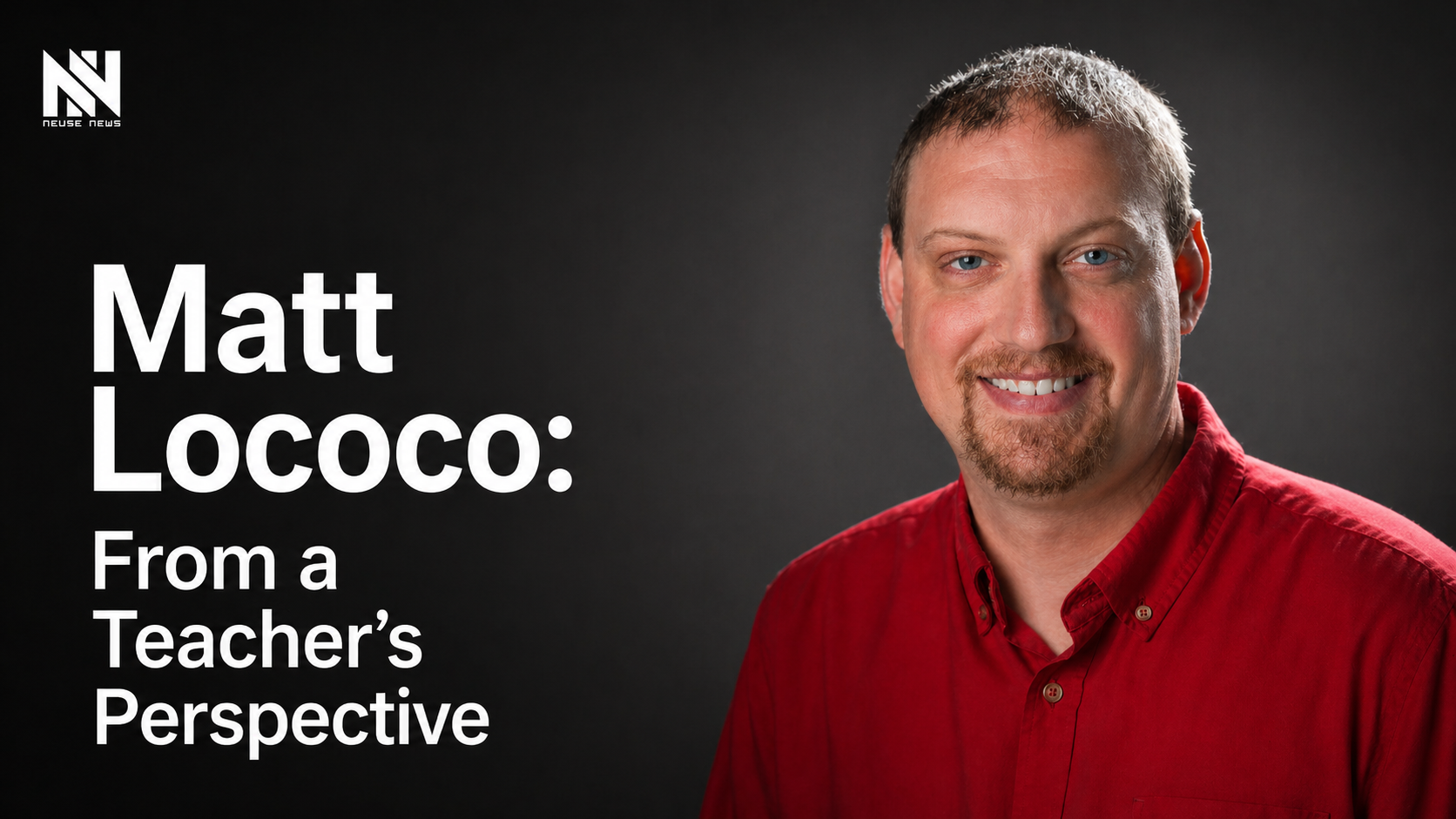
I have been an educator for 20 years, and in those 20 years we have faced teaching shortages, frozen pay, furlough days, increased costs of our benefits, broken promises when it comes to benefits, a pandemic, and now this. Twenty years is a long time to dedicate to the future of our world, and God willing, I will have many more to do it. When you think about education and want to judge us all in the same category as the larger districts, think about the fact that your neighbors or your kids or grandkids are going to be impacted by blind decisions that fail to see the true picture of their impact. Maybe we will come to terms in North Carolina that the broken system we have been using for decades needs change, and maybe we will stop being stuck in partisan battles and put kids first, where our focus should be.