Extension Master Gardener Volunteers of Lenoir County Horticulture Grant: Spring 2026 Recipient Impact Report
By: Paige Petticrew
Consumer Horticulture Agent & Extension Master GardenerSM Volunteer of Lenoir County
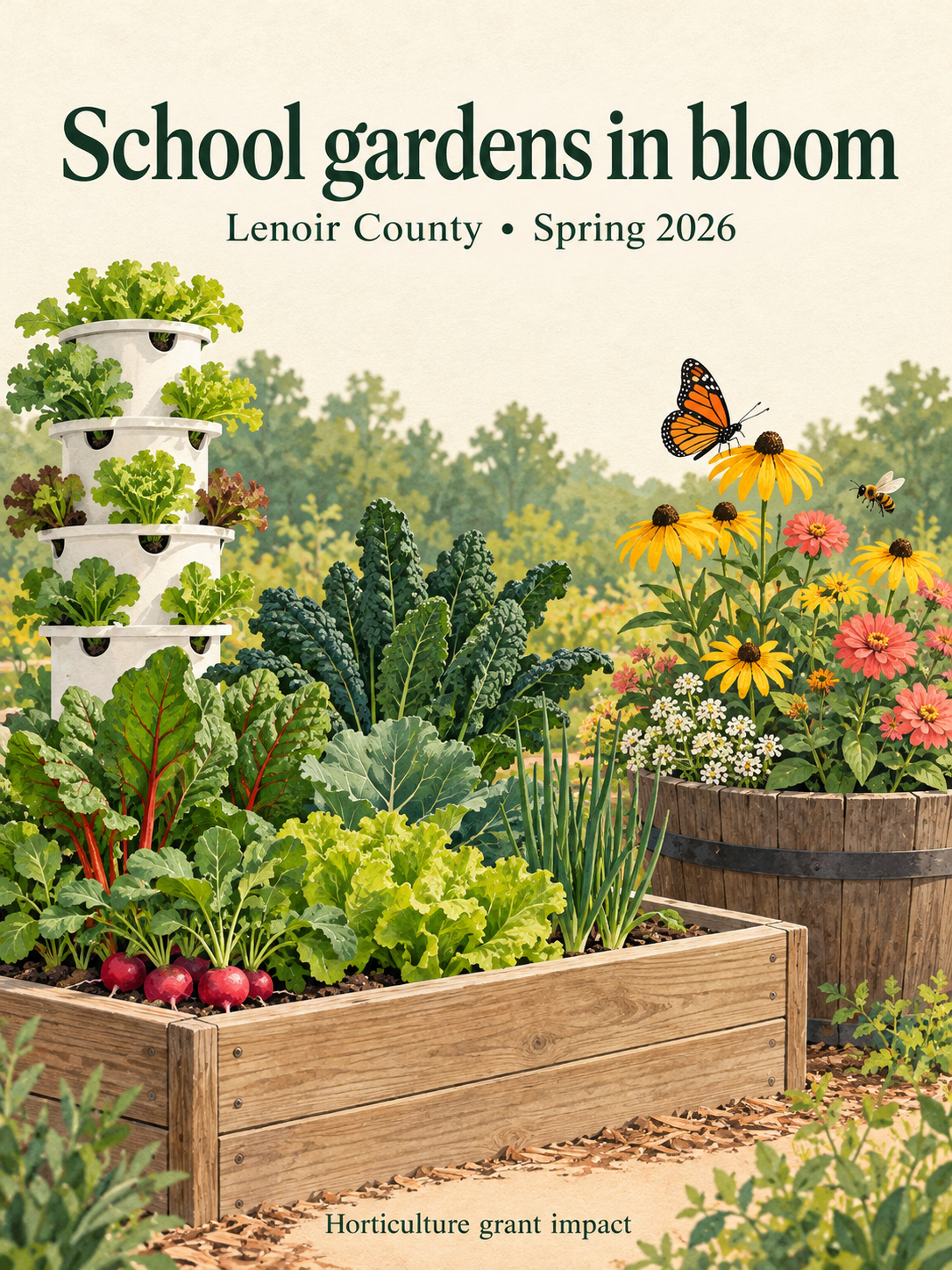
The Extension Master GardenerSM Volunteers (EMGV) of Lenoir County Horticulture Grant continues to make a difference in our local schools by annually providing teachers with funding to bring horticulture to life in the classroom. During the spring semester of 2026, grant recipients used funding to create hands-on learning opportunities that encouraged students to explore plant science, sustainable agriculture, and environmental stewardship.
At Woodington Middle School, Jessica Jones, NBCT Exceptional Children teacher and Agricultural Education and FFA Advisor, used the grant funding received for, Sustainable Solutions: Growing More With Less, to provide students with the opportunity to experiment with hydroponic gardening. Students in two different classes planted a variety of seeds in their classroom hydroponic towers, including green beans, sunflowers, bell peppers, tomatoes, lavender, cucumbers, lettuce, radishes, cilantro, and basil. Throughout the experiment, students observed germination rates, monitored plant growth, and investigated why some plants thrived while others struggled. One class achieved an 80% germination rate, while the other achieved 47%. Students developed their own theories about how sunlight, classroom conditions, and plant support affected their results. They also discovered that some plants require more space for their roots or a more supportive growing medium than a hydroponic system can provide. This experience encouraged students to ask questions, think critically, and learn from real-world challenges. Jones is continuing to use the hydroponic towers during both semesters of the current school year.
Kennedy (Odom) Conway, agriculture education teacher at Contentnea-Savannah, also shared how the grant funding she received for Planting the Future: Rebuilding our School Garden Beds, helped transform an older existing school garden area into a more engaging, functional, and safe outdoor learning space. With these improvements, students have more opportunities to plant, maintain, and harvest crops while applying classroom concepts to real-world experiences. The garden has helped students develop a better understanding of plant science, environmental stewardship, and sustainable agriculture while encouraging collaboration, leadership, and responsibility. It has also become an outdoor classroom that supports STEM education and community involvement. To measure the project's impact, students participated in hands-on learning activities, maintained garden journals, and recorded observations about plant growth, weather conditions, and garden maintenance. Student participation, engagement, collaboration, and the variety and quantity of crops grown also helped demonstrate the benefits of the project.
At South Lenoir High School, Sheree Casias used the grant funding for her project, Pollinator Raised-Bed Garden. The project focused on creating raised garden beds to support pollinators and other beneficial wildlife while providing students with hands-on learning opportunities. To make the most of the grant funding, the raised beds were constructed by recycling 55-gallon drums, teaching students the value of reusing materials and making sustainable choices. This approach also allowed the grant funding to be spent directly on plants for the garden. The beds were planted with annual flowers specifically selected for their high nectar and pollen production to support bees, butterflies, and other beneficial insects. Through this project, students learned about pollination, plant care, wildlife habitats, sustainability, and the importance of protecting beneficial insects. At the end of the growing season, spent flowers and plant stalks were left in place to provide potential nesting and overwintering habitat for pollinators and other beneficial wildlife. This helped students understand that a garden can continue to serve an important purpose even after the flowers have finished blooming. The project benefited the school as a whole by creating an outdoor space that supports wildlife, encourages environmental awareness, and provides an ongoing educational resource for students and staff.
These projects demonstrate how the EMGV of Lenoir County Horticulture Grant helps teachers create meaningful learning experiences that extend beyond traditional classroom instruction. By providing resources for school gardens, hydroponic growing projects, and pollinator habitats, the grant encourages students to explore agriculture, develop problem-solving skills, and build a greater appreciation for the plants and environment around them. We are grateful to the teachers who took the time to share their experiences and to everyone who supports these educational opportunities for our local students.
Interested in applying for the next round of funding? Applications for the EMGV of Lenoir County Horticulture Grant are due October 31, 2026. For a grant application or additional information, please contact Pat Bizzell, Chair of the Grant Committee, at bizzellpb@gmail.com or EMGV of Lenoir County Advisor (and Consumer Horticulture Agent) Paige Petticrew at paige_petticrew@ncsu.edu. We encourage teachers and schools to take advantage of this opportunity to bring more hands-on horticulture and agricultural education to their students!
NC State prohibits discrimination and harassment across numerous protected statuses, including race, color, national origin (including shared ancestry or ethnic characteristics), sex (including sexual orientation, gender identity, stereotypes, and pregnancy/childbirth), religion, age, disability, veteran status, genetic information, and retaliation for civil rights activity.